
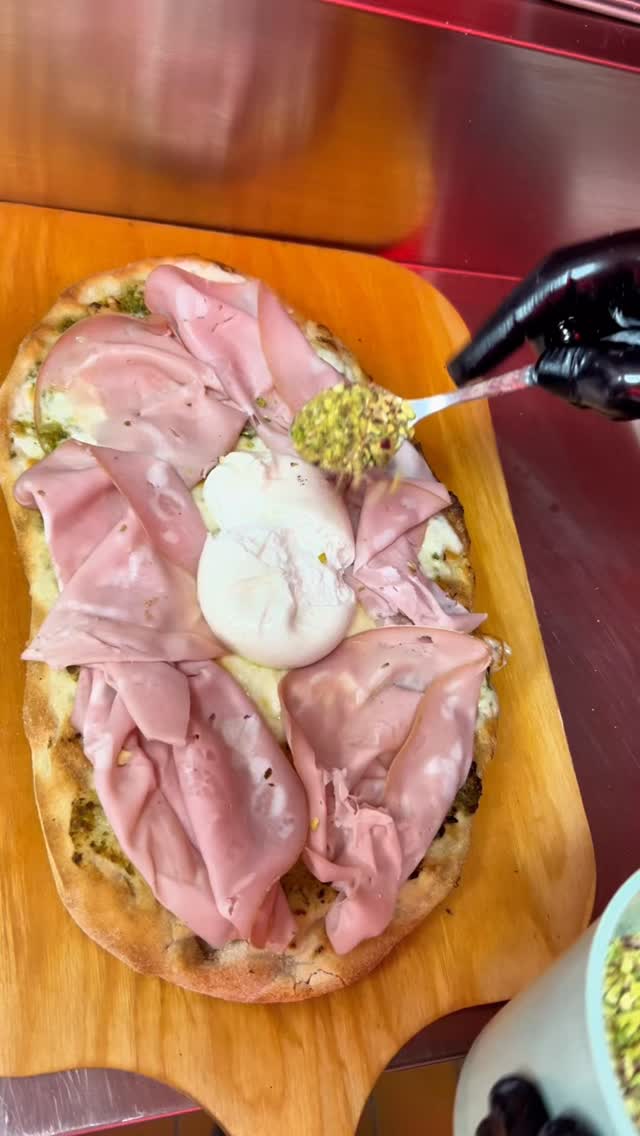
The pinsa romana is a cousin of pizza from Rome, oval in shape, with a very hydrated dough made from a blend of wheat, rice and soy flours. After a long cold rise, it comes out crispy on the outside and very light inside.
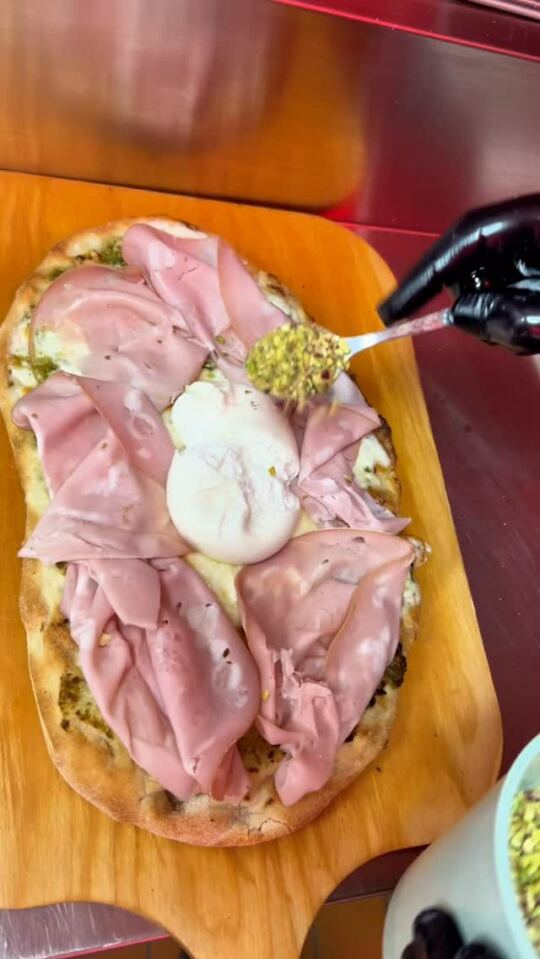
I tried it at Le Pinocchio restaurant in Phalsbourg, with the Stromboli: a green pesto base, burrata, mortadella and crushed pistachios. I also tasted the Pinsa Italiana there, with pesto, tomatoes, stracciatella, basil and oregano, and the Sicilian one, with tomato sauce, anchovies, black olives and oregano. Pinsa, not pizza!
Here I share the traditional pinsa dough recipe, not the restaurant’s, with my favourite topping of pesto, burrata, mortadella and pistachios. You will find the Italiana and Sicilian versions in the tips at the end of the recipe.

The recipe
Classic recipeThe traditional recipe for the dish, not the one from the restaurant where I tasted it.
Ingredients
Dough
- 420 g high-protein type 0 wheat flour (or strong bread flour)
- 60 g rice flour
- 20 g soy flour
- 380 ml very cold water
- 3 g fresh yeast (or 1 g dry yeast)
- 12 g fine salt
- 1 tbsp extra virgin olive oil
- Rice flour for the work surface
Topping
- 160 g green basil pesto (pesto alla genovese)
- 2 burrata, 125 g each
- 200 g thinly sliced mortadella
- 50 g shelled unsalted pistachios
- 2 tbsp extra virgin olive oil
Method
- In a large bowl, mix the three flours. Dissolve the yeast in about 300 ml of the cold water, pour it over the flours and mix for 5 minutes until there is no dry flour left.
- Add the rest of the water little by little while kneading, then the salt and finally the olive oil. Knead for another 10 minutes until the dough is smooth and elastic. It stays very wet and a bit sticky, that is normal.
- Cover and leave to rest for 30 minutes at room temperature. Then put the dough in a well-closed oiled container and let it mature for 24 hours in the fridge (up to 72 hours for more flavour).
- Take the dough out, divide it into 4 pieces of about 225 g and gently shape them into balls. Cover and let them rest for 2 hours 30 minutes at room temperature, until nicely puffed up.
- Preheat the oven to 250 °C for 45 minutes with a pizza stone, a baking steel or an upside-down baking tray. Roughly crush the pistachios.
- On a surface dusted with rice flour, press one ball with your fingertips into an oval of about 30 x 20 cm. Press the dough rather than stretching it, to keep the air bubbles.
- Brush the pinsa with half a tablespoon of olive oil and bake it plain for 6 to 8 minutes, until golden and crispy underneath. Repeat with the other balls.
- Straight out of the oven, spread 40 g of pesto on each hot pinsa, then add 50 g of mortadella, half a burrata torn by hand and the crushed pistachios. Serve right away, while the base is still hot and the burrata nice and cool.
Tips and variations
- Italiana variation: spread the pesto before baking with 100 g of halved cherry tomatoes per pinsa, then add 60 g of stracciatella, a few basil leaves and a pinch of oregano when it comes out of the oven.
- Sicilian variation: replace the pesto with 80 g of salted tomato sauce per pinsa, bake, then add 4 anchovy fillets, 8 black olives and a pinch of oregano.
- Without cured meat: just skip the mortadella. Vegan version: use a cheese-free pesto and replace the burrata with grilled vegetables.
- No soy flour? Replace it with the same weight of rice flour.
- Pre-baked bases freeze very well: just reheat them for 4 to 5 minutes in the oven at 220 °C before adding the toppings.
Recipe shared for guidance only, adapt it to your equipment: times and temperatures may vary. Check for allergens (gluten, milk, eggs, fish, shellfish, nuts, sesame…) and make sure ingredients are fresh. Raw or undercooked fish, meat and eggs are not recommended for pregnant women, young children, elderly or vulnerable people. Take care with hot oil, flambéing and alcohol. I am not a health or nutrition professional.