
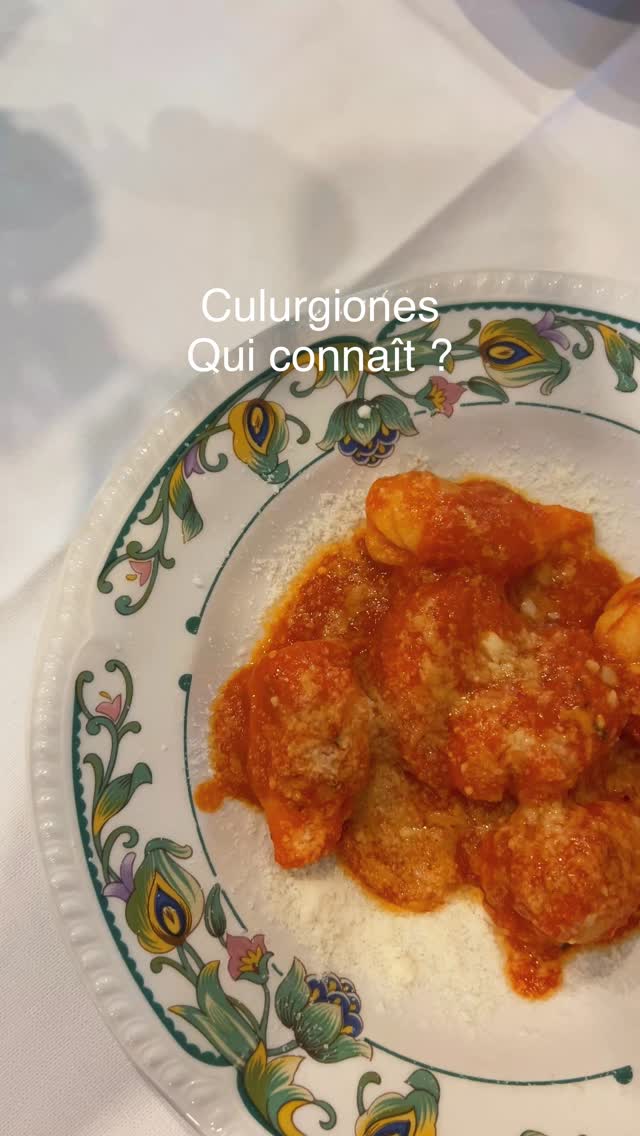
Sardinian culurgiones are filled pasta from Ogliastra, on the east coast of Sardinia. The filling is very simple, potato, pecorino, garlic and mint, but what makes them unique is how they are sealed: a wheat ear pleat, made by hand, fold after fold. They are usually served with a basil tomato sauce and a little grated pecorino.
I had them on 24 May 2026 in Milan, at Osteria Ippodromo, right next to the San Siro stadium. On Instagram I asked who knew this Sardinian dish, and many people had never tried it. It is a real gem.
Here is the traditional recipe. The pleating takes a bit of patience, but nothing impossible: your first ones may look a little wonky, the next ones will be much prettier.

The recipe
Classic recipeThe traditional recipe for the dish, not the one from the restaurant where I tasted it.
Ingredients
Dough
- 300 g fine durum wheat semolina (semola rimacinata)
- 100 g type 00 flour
- 200 ml lukewarm water
- 1 tbsp extra virgin olive oil
- 1 tsp fine salt
Filling
- 800 g floury potatoes
- 150 g aged pecorino sardo, grated
- 2 garlic cloves
- 15 fresh mint leaves
- 3 tbsp extra virgin olive oil
- Salt and black pepper
Sauce and serving
- 700 g tomato passata
- 2 tbsp extra virgin olive oil
- 1 garlic clove
- 6 basil leaves
- Salt
- 40 g grated pecorino sardo to serve
Method
- Cook the whole, unpeeled potatoes in salted water for 25 to 30 minutes, until tender. Peel them while still hot, pass them through a potato ricer and leave to cool.
- For the filling, warm the olive oil with the 2 crushed garlic cloves for 2 minutes over low heat without browning, then remove the garlic. Mix the mashed potato with the pecorino, chopped mint, garlic oil and pepper. Taste before adding salt, as pecorino is already salty. Shape about 40 balls of 20 g and keep them in the fridge.
- For the dough, mix the semolina, flour and salt. Add the oil, then the lukewarm water little by little, and knead for 10 minutes until smooth and elastic. Wrap it and leave to rest for 30 minutes at room temperature.
- Meanwhile, make the sauce: fry the garlic clove in the oil for 1 minute, add the passata and a pinch of salt, then simmer for 20 minutes over low heat. Add the basil at the end.
- Roll the dough out very thinly, about 2 mm, with a rolling pin or a pasta machine. Cut 8 cm discs with a cutter, keeping the rest of the dough covered so it does not dry out.
- Place a ball of filling in the centre of a disc, held in the palm of your hand. Fold the bottom of the dough over the filling, then pinch alternately left and right as you work upwards to create the wheat ear pattern. Close the top with a final pinch and place the culurgiones on a floured tray.
- Cook the culurgiones in small batches in a large pot of salted boiling water for 4 to 5 minutes, until they float and the pleats are tender. Lift them out with a slotted spoon.
- Serve topped with tomato sauce, a sprinkle of grated pecorino and a basil leaf.
Tips and variations
- If the wheat ear pleat is tricky at first, just seal the discs into half moons: the taste is exactly the same.
- Raw culurgiones freeze very well: first flat on a tray, then in a bag. Cook them straight from frozen, adding 2 minutes.
- In Sardinia they are also eaten simply with butter and sage.
- Do not skip the mint: it gives the filling all its freshness.
Recipe shared for guidance only, adapt it to your equipment: times and temperatures may vary. Check for allergens (gluten, milk, eggs, fish, shellfish, nuts, sesame…) and make sure ingredients are fresh. Raw or undercooked fish, meat and eggs are not recommended for pregnant women, young children, elderly or vulnerable people. Take care with hot oil, flambéing and alcohol. I am not a health or nutrition professional.