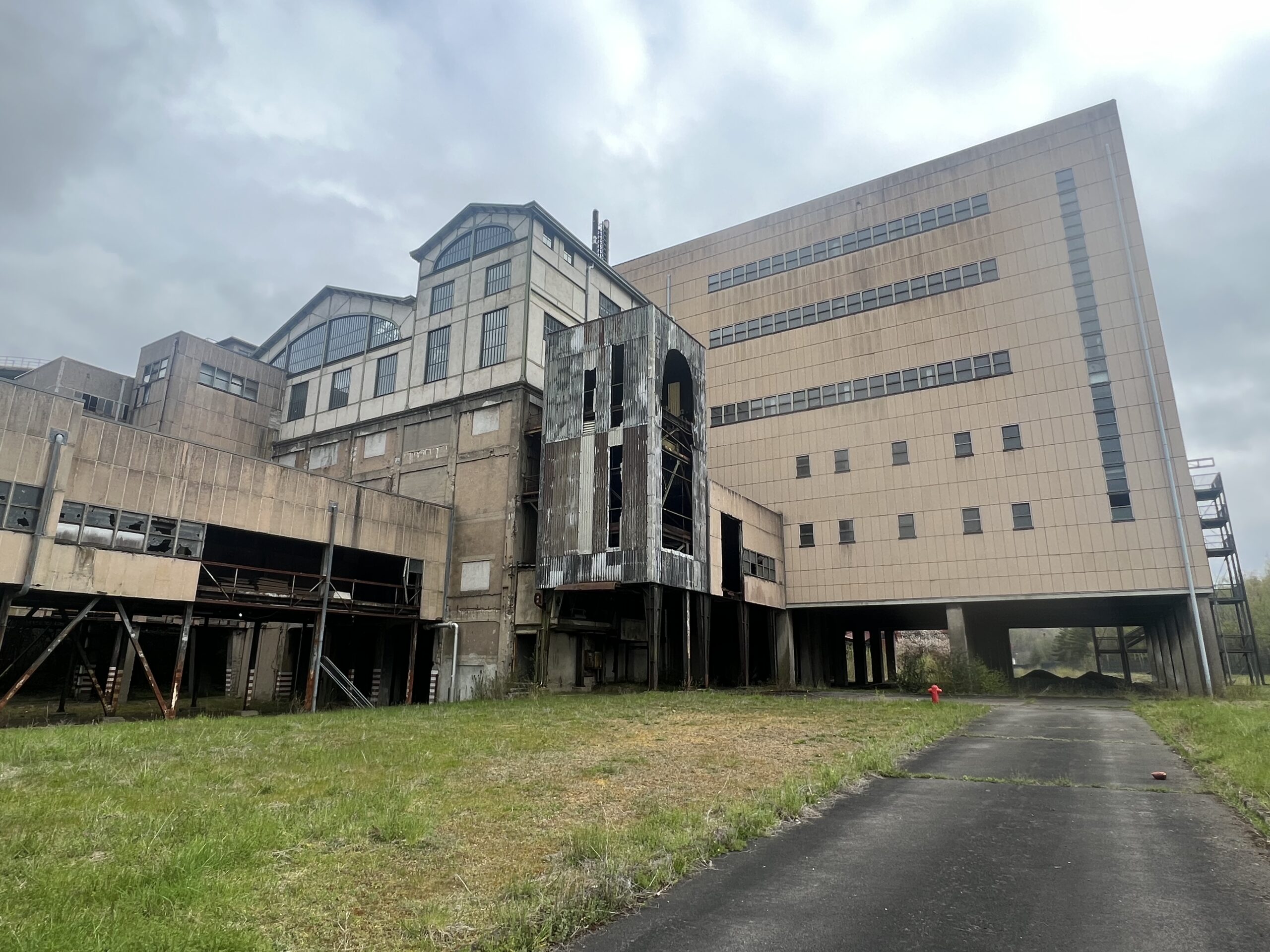
Sunday 16 April 2023. The Flavour Market in Petite-Rosselle, set up around and inside the Mining Museum, in the rain, and a walk in the Parc Explor Wendel between industrial remains and ponds.
The Flavour Market in Petite-Rosselle, around and inside the Mining Museum
We went to the Flavour Market (Marché des saveurs), held around and inside the Mining Museum. About twenty producers and exhibitors took part. It is an ideal place for this kind of event, and a way to learn about the mining history of the region at the same time. The weather did not play along (rain), but I do not regret the visit at all.


A walk in the Parc Explor Wendel
The same day, a walk in the east of the Moselle department, in the Parc Explor Wendel, between industrial remains and ponds. I came back at the end of the year: the Parc Explor Wendel on 3 December 2023. The day before, I was at the stadium: Metz - Bordeaux on 15 April 2023.

Good to know about the Flavour Market in Petite-Rosselle
Petite-Rosselle is a small town in the east of the Moselle department, right on the German border: just opposite lies Großrosseln, in Saarland. It is part of the Lorraine coal basin, where coal was mined for more than a century, until the last pit closed in Creutzwald in 2004. To find out more, see its Wikipedia page.
The Mining Museum stands on the former Wendel pithead, named after the family of industrialists who ran the site. Inside you learn about the miners’ work, the machines and reconstructed galleries, which makes an unusual setting for the Flavour Market in Petite-Rosselle.
This kind of market is a chance to meet local producers and taste products from the region. Lorraine, for example, is famous for the mirabelle plum, used for jams, tarts and a fruit brandy. My advice: bring an umbrella or a raincoat, as part of the market takes place outdoors.
If you have time, extend the outing with a walk around the site. The headframes, those tall metal structures that stood over the shafts, have become symbols of the coal basin, and the industrial buildings and ponds also tell the story of the region’s mining past.