
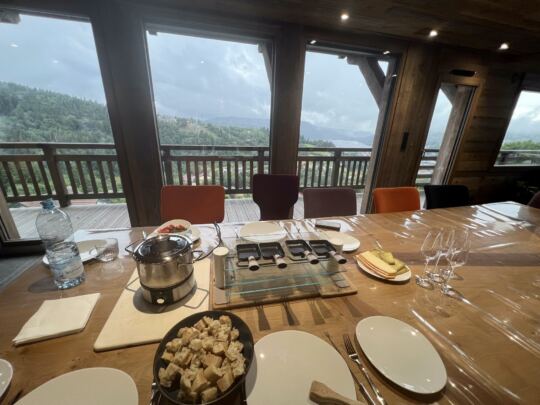
Wednesday 30 July 2025. At the chalet in Gérardmer, a meal of Vosges cheeses: raclette and fondue.
Raclette or fondue with Vosges cheeses? Both
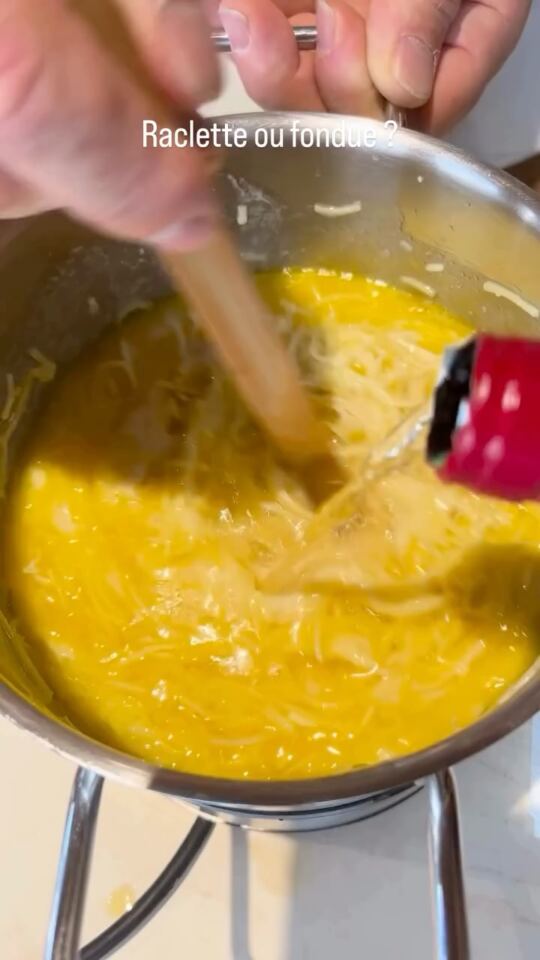
Raclette or cheese fondue, how do you choose? We do both! Using only Vosges cheeses, tomme among them, including the one with wild garlic.

A quick tour of Vosges cheeses
Raclette originally comes from Valais, in Switzerland. Its name comes from the French verb “racler”, to scrape: half a wheel of cheese was heated by the fire, then the melted part was scraped onto potatoes. Fondue means melting cheese with white wine in a pot called a caquelon, then dipping pieces of bread into it. Two great mountain classics, and they work really well in a chalet.
In the massif, the best known is Munster, also called munster-géromé, the word “géromé” coming from Gérardmer. But the mountain farms also make tommes, milder pressed cheeses that are perfect for melting. You find them plain or flavoured, for example with caraway or wild garlic.
These cheeses are linked to the hautes chaumes, the pastures on the summits. In the past the marcaires, the Vosges cowherds and cheesemakers, took their herds up there for the summer and made cheese right on the spot. The tradition lives on in the fermes-auberges, farm inns that serve the repas marcaire: a meat pie, smoked pork collar with potatoes roasted with onion, then Munster and a dessert. Plan a good walk beforehand, it is a hearty meal.
Wild garlic is a wild plant that grows in damp woodland. Its leaves, picked in spring, taste of garlic but more mildly than the clove, and they are used to flavour cheese, butter or pesto.
My tip: buy your Vosges cheeses straight from a farm or a local cheesemonger, you will often have more choice. And for raclette as for fondue, plan some potatoes, a little charcuterie and a nice green salad to lighten the meal.
To find out more about Munster, here is its Wikipedia page. And all my posts about the town are gathered on my Gérardmer page.