

My list of twelve Italian food specialities to try at least once, from pasta to dessert. With a street-food bonus at the end.
Italian food specialities, the pasta: carbonara, vongole, lasagne and culurgiones
Carbonara: the real Roman pasta, with egg, guanciale, pecorino and black pepper. No cream!
Spaghetti alle vongole: Neapolitan pasta with fresh clams, garlic and parsley.
Lasagne alla bolognese: generously layered sheets of lasagne with tomato sauce and minced meat.
Culurgiones d’Ogliastra: Sardinian ravioli filled with potato, pecorino and mint, which keeps them fresh.
Mains: polpette, parmigiana, bistecca and pizza Margherita
Polpette alla napoletana: tender meatballs simmered in a fragrant tomato sauce.
Parmigiana di melanzane: baked aubergines with tomato sauce, melting mozzarella and Parmesan.
Bistecca alla fiorentina: a rare beef steak, grilled, with a drizzle of olive oil.
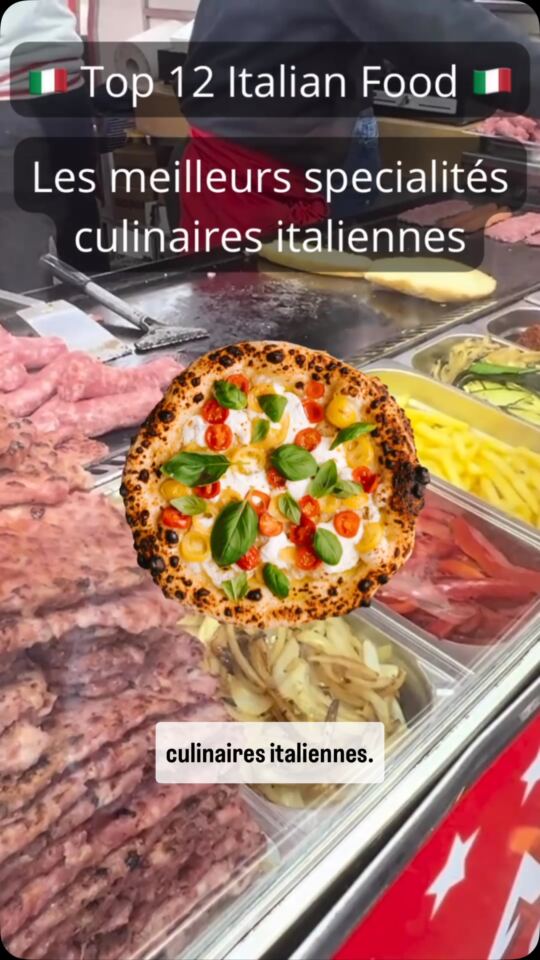
Pizza Margherita: the Neapolitan classic, tomato sauce, mozzarella and basil leaves.
Fried: arancini and fritto misto di mare
Arancini siciliani: breaded rice balls filled with ragù, mozzarella and peas.
Fritto misto di mare: a fried mix of squid, prawns and small crispy fish.
Desserts: cannoli and tiramisu
Cannoli siciliani: crisp Sicilian pastry tubes filled with sweet ricotta, pistachios and candied fruit.
Tiramisu: the Italian dessert everyone knows, with mascarpone, espresso and cocoa.
The bonus: panino con salsiccia o salamella
A typical sandwich, with sausage, grilled onions and peppers. It is a classic of Italian street food, a treat to eat on the go! From Sicily to Tuscany, from Naples to Sardinia, these dishes tell of the Italians’ love of cooking. The video is just below.

My tips for trying Italian food specialities on the spot
Italian food specialities are above all regional. Each region has its own dishes, products and habits: butter and rice in the north, olive oil, tomatoes and citrus fruit in the south. Carbonara is best eaten in Rome, bistecca in Florence, arancini in Sicily and culurgiones in Sardinia. Many products are protected by a designation of origin (PDO), such as Parmigiano Reggiano or mozzarella di bufala campana.
In a restaurant the meal often follows a set order: antipasto, primo (pasta or risotto), secondo (meat or fish) with a contorno, then dessert. You don’t have to order everything! My tip: choose the dishes of the region you are in, and book at the weekend for the well-known places. To go further, here is my Italy page and the Italian cuisine page on Wikipedia.