
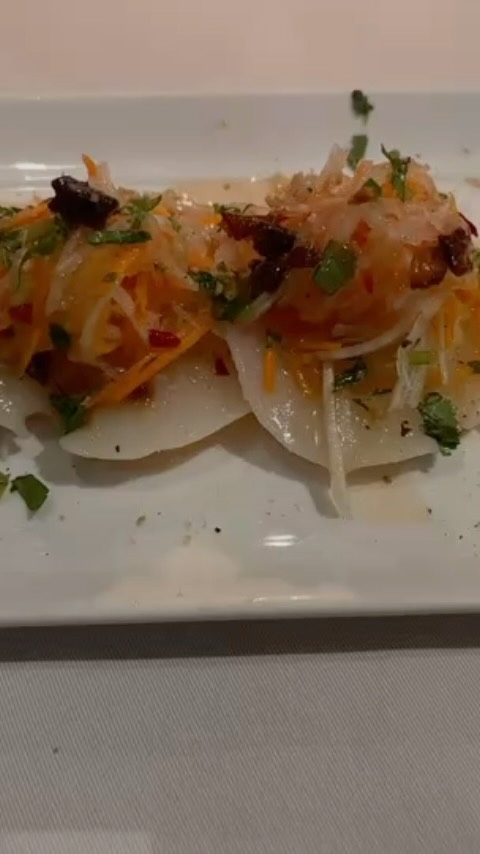
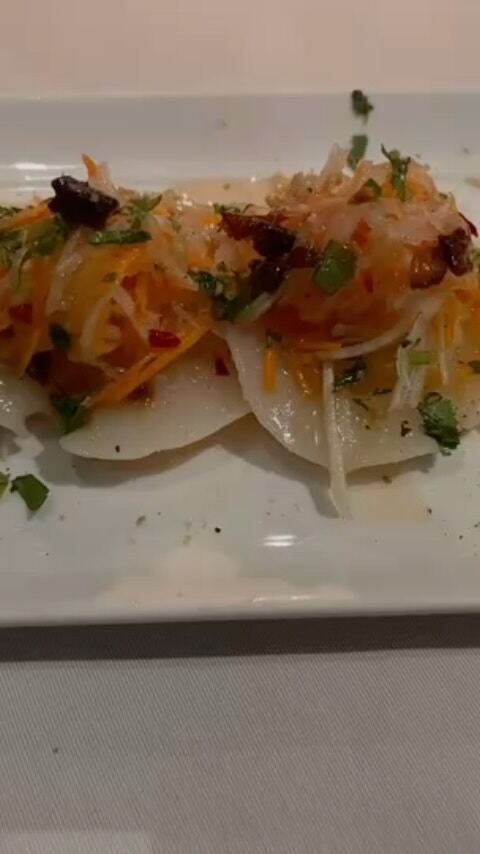
Bánh bèo are small rice cakes steamed in little saucers, whose name recalls the duckweed floating on ponds. They come from the area around Huế but are also made in the South, where they are topped with mung bean paste. The batter, made from rice flour and a little tapioca starch, turns translucent and tender; it is covered with dried shrimp ground to a floss, spring onion oil and fried shallots, then dressed with sweetened fish sauce.
I ate them on 26 October 2024 at the Vietnamese restaurant Indochine in Saarbrücken, during a meal I found exceptional and delicious. I tried bánh bèo kiểu Nam bộ, Southern style, thin sticky rice cakes in the Cochinchina way, before a bún cá soup and several other dishes.
This is not the restaurant’s recipe, but the classic bánh bèo recipe. It is of medium difficulty: you need small heatproof saucers (or silicone moulds) and a steamer, and you get the knack after the first batch.

The recipe
Classic recipeThe traditional recipe for the dish, not the one from the restaurant where I tasted it.
Ingredients
Batter
- 150 g rice flour (not glutinous)
- 20 g tapioca starch
- 450 ml lukewarm water
- 1/2 teaspoon salt
- 1 tablespoon neutral oil
Toppings
- 100 g split yellow mung beans
- 60 g dried shrimp
- 4 spring onions
- 4 tablespoons neutral oil
- 3 tablespoons fried shallots
- Salt
Fish sauce dressing
- 3 tablespoons fish sauce
- 2 tablespoons sugar
- 6 tablespoons lukewarm water
- 1 tablespoon lime juice
- 1 garlic clove
- 1 red chilli
Method
- Make the batter: whisk the rice flour, tapioca starch and salt with the lukewarm water until very runny, like milk. Add the oil, cover and leave to rest for at least 1 hour (up to 3 hours). Soak the mung beans in cold water for 1 hour, and the dried shrimp in lukewarm water for 15 minutes.
- Drain the mung beans and steam them for 20 minutes, until they crush easily between your fingers. Mash into a smooth paste with a pinch of salt and a little hot water if needed.
- Drain and dry the shrimp, chop them finely in a food processor, then dry-fry them in a pan over a low heat for 6 to 8 minutes, stirring, until you have a light orange floss.
- Finely slice the spring onions into a heatproof bowl. Heat the 4 tablespoons of oil until shimmering and pour it over the spring onions with a pinch of salt: they should sizzle. Make the dressing by dissolving the sugar in the water, then adding the fish sauce, lime juice, crushed garlic and sliced chilli.
- Arrange the little saucers in the steamer basket and heat them for 2 minutes over strong steam. Stir the batter, pour about 1 and a half tablespoons into each saucer and steam, covered, for 6 to 7 minutes, until the cakes are translucent with a small dip in the centre. Let them cool for 5 minutes before unmoulding or serving in the saucers. Repeat with the rest of the batter.
- Top each cake with a small spoonful of mung bean paste, a pinch of shrimp floss, a little spring onion oil and fried shallots. Serve warm, spooning over the dressing as you eat, with a small spoon.
Tips and variations
- Without traditional saucers, use small soy sauce dishes or lightly oiled silicone mini-muffin moulds.
- In Huế, crispy fried pork rinds are often added; in the South, a drizzle of reduced coconut milk is also popular.
- The rested batter keeps overnight in the fridge; stir it well before using, as the flour settles at the bottom.
Recipe shared for guidance only, adapt it to your equipment: times and temperatures may vary. Check for allergens (gluten, milk, eggs, fish, shellfish, nuts, sesame…) and make sure ingredients are fresh. Raw or undercooked fish, meat and eggs are not recommended for pregnant women, young children, elderly or vulnerable people. Take care with hot oil, flambéing and alcohol. I am not a health or nutrition professional.