
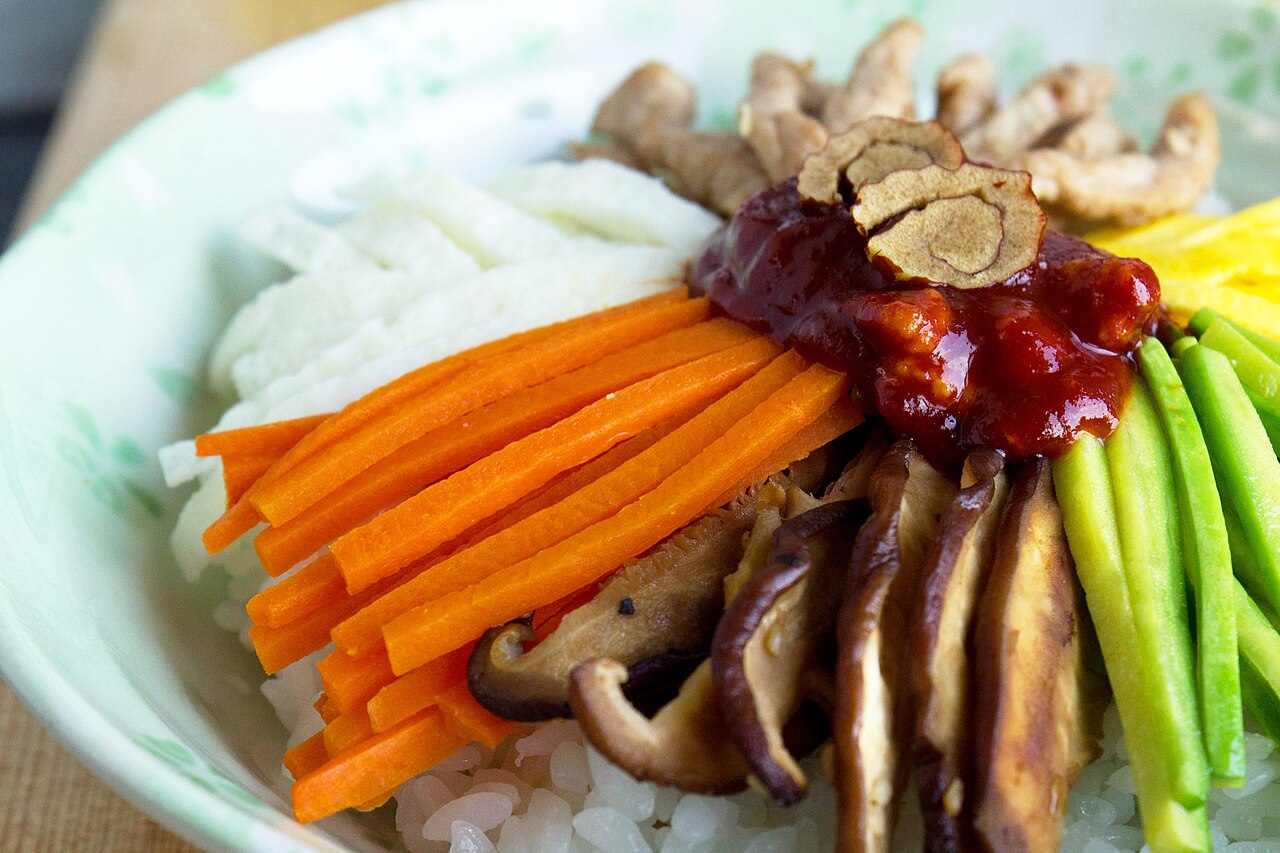
Here is my bibimbap recipe, the famous Korean rice bowl topped with vegetables, meat and an egg. The name roughly means “mixed rice”: you arrange everything nicely over the rice, then mix it all with the sauce before eating.
It is one of the best-known dishes of Korean cuisine, loved for its balance of crunchy vegetables, tender beef, runny egg and spicy sauce. Each ingredient is prepared separately, which takes a little time, but the result is always colorful and delicious.
Here I give you the traditional version with marinated beef, spinach, carrots, zucchini, bean sprouts and mushrooms. You can adapt the vegetables to the season, and the dish is easy to prepare ahead. It is a great dish to share, since everyone mixes their own bowl as they like.
The recipe
Classic recipeThe traditional recipe for the dish, not the one from the restaurant where I tasted it.
Ingredients
Rice
- 300 g Korean short-grain or sushi rice
- 400 ml water
Marinated beef
- 250 g beef (rump or sirloin), in thin strips
- 2 tbsp soy sauce
- 1 tbsp sugar
- 1 tbsp sesame oil
- 2 garlic cloves, chopped
- 1 pinch of pepper
Vegetables
- 200 g fresh spinach
- 2 carrots (200 g), julienned
- 1 zucchini (200 g), julienned
- 200 g bean sprouts
- 150 g button mushrooms, sliced
- 2 tbsp sesame oil
- 2 garlic cloves, chopped
- 1 tsp salt
- 3 tbsp neutral oil for cooking
Eggs and sauce
- 4 eggs
- 4 tbsp gochujang (Korean chili paste)
- 1 tbsp sesame oil
- 1 tbsp sugar
- 1 tbsp rice vinegar
- 1 tbsp water
- 1 tbsp sesame seeds
Method
- Wash the rice in several changes of water. Cook it with 400 ml of water: bring to a boil, cover, lower the heat for 12 minutes, then let it steam for 10 minutes off the heat. Keep warm.
- Mix the beef with the soy sauce, sugar, 1 tbsp of sesame oil, garlic and pepper. Let it marinate for 15 minutes.
- Make the sauce: mix the gochujang, sesame oil, sugar, rice vinegar and water until smooth.
- Blanch the spinach for 1 minute in boiling water, refresh, squeeze well and chop roughly. Season with 1 tsp of sesame oil, a pinch of salt and a little garlic. Do the same with the bean sprouts, blanched for 3 minutes.
- In a pan over high heat, sauté each vegetable separately with a little neutral oil and a pinch of salt: the carrots (2 minutes), the zucchini (2 minutes) and the mushrooms (3 minutes). Keep each vegetable in a small bowl.
- Sear the marinated beef in the same very hot pan for 2 to 3 minutes, until browned and caramelized.
- Fry the eggs sunny side up in an oiled pan, with the yolk still runny.
- Divide the hot rice among 4 large bowls. Arrange the vegetables and beef in separate bunches, set an egg in the center, sprinkle with sesame seeds and serve with the sauce. Everything is mixed before eating.
Tips and variations
- For a crispy bibimbap, heat a stone bowl with a little sesame oil and let the rice crisp up at the bottom.
- Add kimchi or pickled radish for more acidity.
- For a vegetarian version, replace the beef with firm tofu marinated the same way.
- Adjust the heat with the gochujang: start with 2 spoonfuls if you are not used to it.
Recipe shared for guidance only, adapt it to your equipment: times and temperatures may vary. Check for allergens (gluten, milk, eggs, fish, shellfish, nuts, sesame…) and make sure ingredients are fresh. Raw or undercooked fish, meat and eggs are not recommended for pregnant women, young children, elderly or vulnerable people. Take care with hot oil, flambéing and alcohol. I am not a health or nutrition professional.
Photo: Chloe Lim, CC BY 2.0, via Wikimedia Commons