
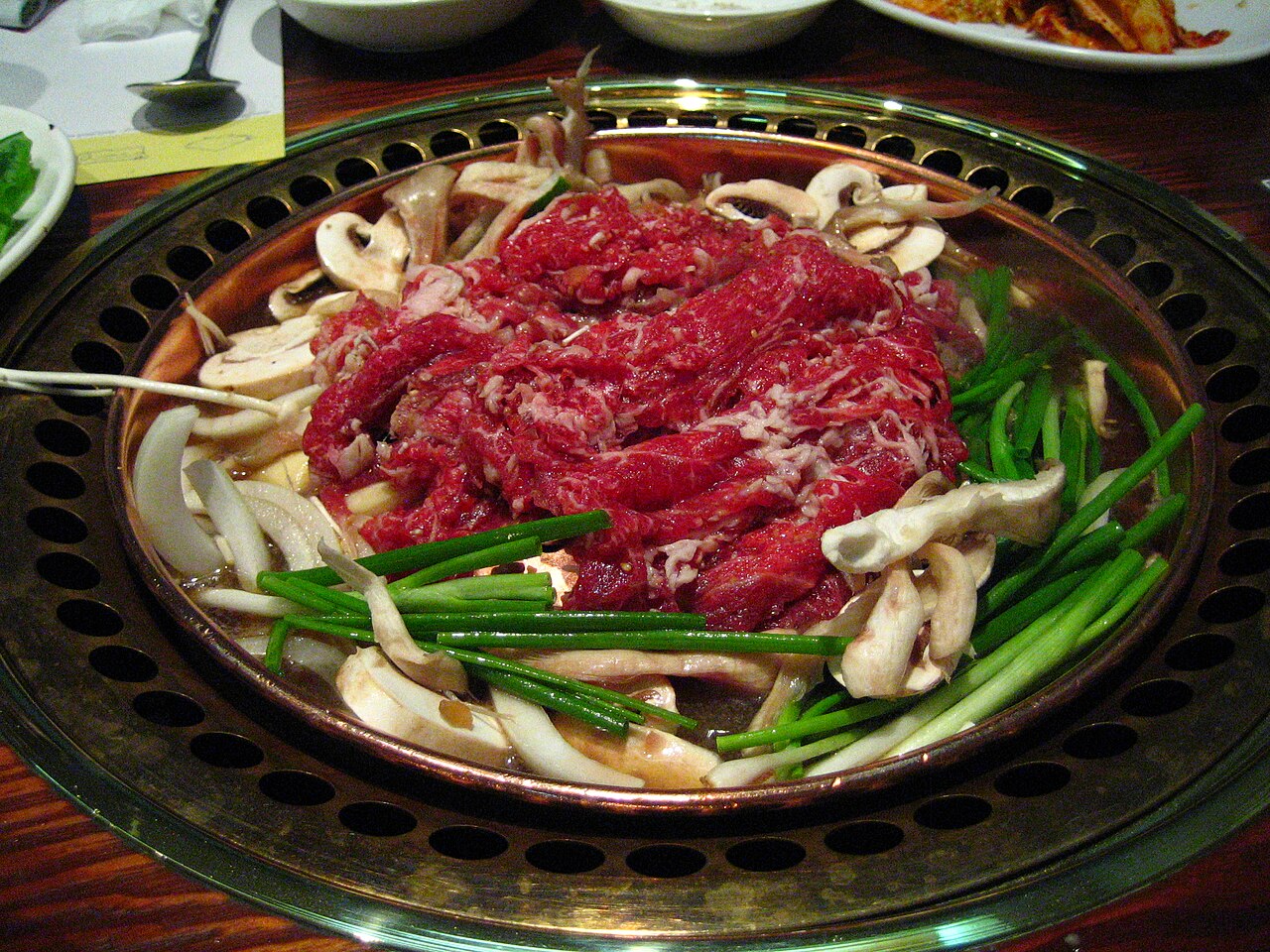
This bulgogi recipe is the famous Korean marinated beef, seared over high heat. Bulgogi literally means fire meat: thin slices of beef soaked in soy sauce, garlic, sesame and pear, which caramelize in a few minutes in a pan or on the grill.
It is one of the best-known dishes of Korean cuisine, the one you find on Korean barbecue tables. The grated pear in the marinade tenderizes the meat and gives it a natural sweetness, which is the secret to a really tender bulgogi.
It is traditionally served with white rice, lettuce leaves for making little wraps, ssamjang and a few banchan, including kimchi. This version is simple, with ingredients that are easy to find. The meat cooks in just a few minutes, so it also works well for a quick weeknight dinner.
The recipe
Classic recipeThe traditional recipe for the dish, not the one from the restaurant where I tasted it.
Ingredients
The beef
- 600 g beef (sirloin or rump), sliced very thinly
The marinade
- 5 tbsp soy sauce (75 ml)
- 2 tbsp sugar (25 g)
- 1 tbsp honey (20 g)
- 1 tbsp sesame oil (15 ml)
- 4 garlic cloves, crushed
- 1 Asian pear or 1 apple, grated (150 g)
- 1 small onion (100 g), thinly sliced
- 2 spring onions, sliced
- 1/2 tsp black pepper
Cooking and serving
- 1 tbsp neutral oil (15 ml)
- 1 tbsp sesame seeds
- 300 g white rice (uncooked weight)
- 1 lettuce, leaves separated
- 4 tbsp ssamjang (optional)
Method
- Put the beef in the freezer for 30 minutes to firm it up, then slice it very thinly (2 mm) across the grain.
- Grate the pear. In a large bowl, mix the soy sauce, sugar, honey, sesame oil, crushed garlic, grated pear and pepper.
- Add the beef, the sliced onion and half of the spring onions. Mix by hand to coat every slice, cover and marinate for at least 1 hour in the fridge (12 hours at most).
- Cook the rice according to the package directions while the meat marinates.
- Heat the oil in a large pan or on a very hot griddle. Sear the meat in small batches, 1 to 2 minutes per side, without crowding the pan so it caramelizes instead of boiling.
- Return all the meat to the pan with its juices, stir for 30 seconds, then sprinkle with sesame seeds and the remaining spring onions.
- Serve with hot rice, lettuce leaves and ssamjang: put a little rice and meat in a leaf, add a bit of sauce and roll it up.
Tips and variations
- Do not marinate for more than 12 hours: the pear tenderizes the meat and eventually makes it mushy.
- Always cook in small batches, otherwise the meat releases its water and boils instead of caramelizing.
- Save time by buying pre-sliced thin beef from an Asian grocery store (the shabu-shabu cut).
- Pork version: replace the beef with 600 g thinly sliced pork belly and add 1 tbsp gochujang to the marinade.
- Leftovers are perfect in a bibimbap or a sandwich.
Recipe shared for guidance only, adapt it to your equipment: times and temperatures may vary. Check for allergens (gluten, milk, eggs, fish, shellfish, nuts, sesame…) and make sure ingredients are fresh. Raw or undercooked fish, meat and eggs are not recommended for pregnant women, young children, elderly or vulnerable people. Take care with hot oil, flambéing and alcohol. I am not a health or nutrition professional.
Photo: ayustety, CC BY-SA 2.0, via Wikimedia Commons