
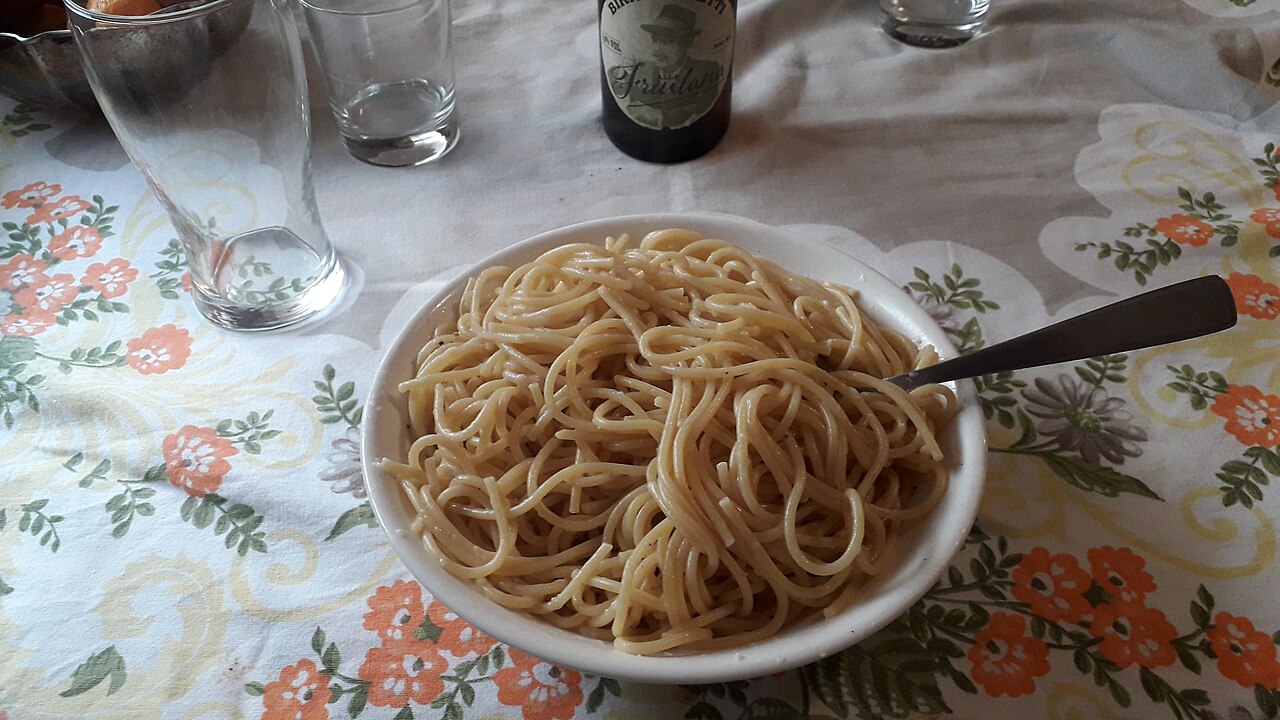
This cacio e pepe recipe is one of the great classics of Roman cooking, along with carbonara, amatriciana and gricia. The name means cheese and pepper, and that is truly all it is: pasta, pecorino romano, black pepper and a little cooking water.
With so few ingredients, everything comes down to technique. The pecorino must be grated very finely and mixed with warm water to form a cream, otherwise it clumps. It is the step everyone gets wrong the first time, and once you understand it, you get it right every time.
I make it with spaghetti, but in Rome they also use tonnarelli. It takes 15 minutes and it is much better than you would expect. Serve it right away, because the sauce thickens quickly as it cools.
The recipe
Classic recipeThe traditional recipe for the dish, not the one from the restaurant where I tasted it.
Ingredients
- 320 g spaghetti (or tonnarelli)
- 200 g pecorino romano, very finely grated
- 2 tsp whole black peppercorns (4 g)
- 10 g coarse salt for 2 liters of cooking water
Method
- Grate the pecorino very finely, preferably with a Microplane-style grater. The finer it is, the better it melts. Keep it at room temperature.
- Toast the pepper in a dry large pan over medium heat for 1 minute, until fragrant. Crush it coarsely in a mortar, then put it back in the pan.
- Bring 2 liters of water to a boil with 10 g of coarse salt: little water and little salt, because the pecorino is already salty and the water becomes richer in starch. Cook the spaghetti 2 minutes less than the package says.
- Scoop out 250 ml of the cooking water. In a bowl, mix the pecorino with about 80 ml of warm cooking water, stirring with a spoon, until you get a thick, smooth cream.
- Pour 100 ml of cooking water into the pan with the pepper and bring to a simmer. Add the drained spaghetti and keep cooking for 1 to 2 minutes, stirring.
- Turn off the heat and wait 30 seconds. Pour the pecorino cream over the pasta and toss vigorously, lifting the spaghetti with tongs, until the sauce is glossy and creamy. Add a little cooking water if it is too thick.
- Serve immediately in warm plates, with a little freshly ground pepper and pecorino.
Tips and variations
- The secret: turn off the heat before adding the cheese. Over heat, the proteins in the pecorino seize up and form clumps.
- Pecorino romano is essential for the authentic taste. If you cannot find it, mix pecorino and parmesan in equal parts, the parmesan is milder.
- Always serve in warm plates, because the sauce sets quickly as it cools. If it thickens, add a spoonful of hot cooking water.
- This dish does not keep: eat it right away.
Recipe shared for guidance only, adapt it to your equipment: times and temperatures may vary. Check for allergens (gluten, milk, eggs, fish, shellfish, nuts, sesame…) and make sure ingredients are fresh. Raw or undercooked fish, meat and eggs are not recommended for pregnant women, young children, elderly or vulnerable people. Take care with hot oil, flambéing and alcohol. I am not a health or nutrition professional.
Photo: Blackcat, CC BY-SA 4.0, via Wikimedia Commons