
Pelmeni are small meat dumplings that were born in Siberia and became an iconic dish across Russia and the former Soviet republics. A very simple dough of flour, egg and water wraps a raw filling of minced beef and pork seasoned with grated onion and pepper. They are shaped into half-moons whose tips are then pinched together, giving them their little ear shape. In the past they were made by the hundred in winter and kept frozen outdoors: they still freeze beautifully today.
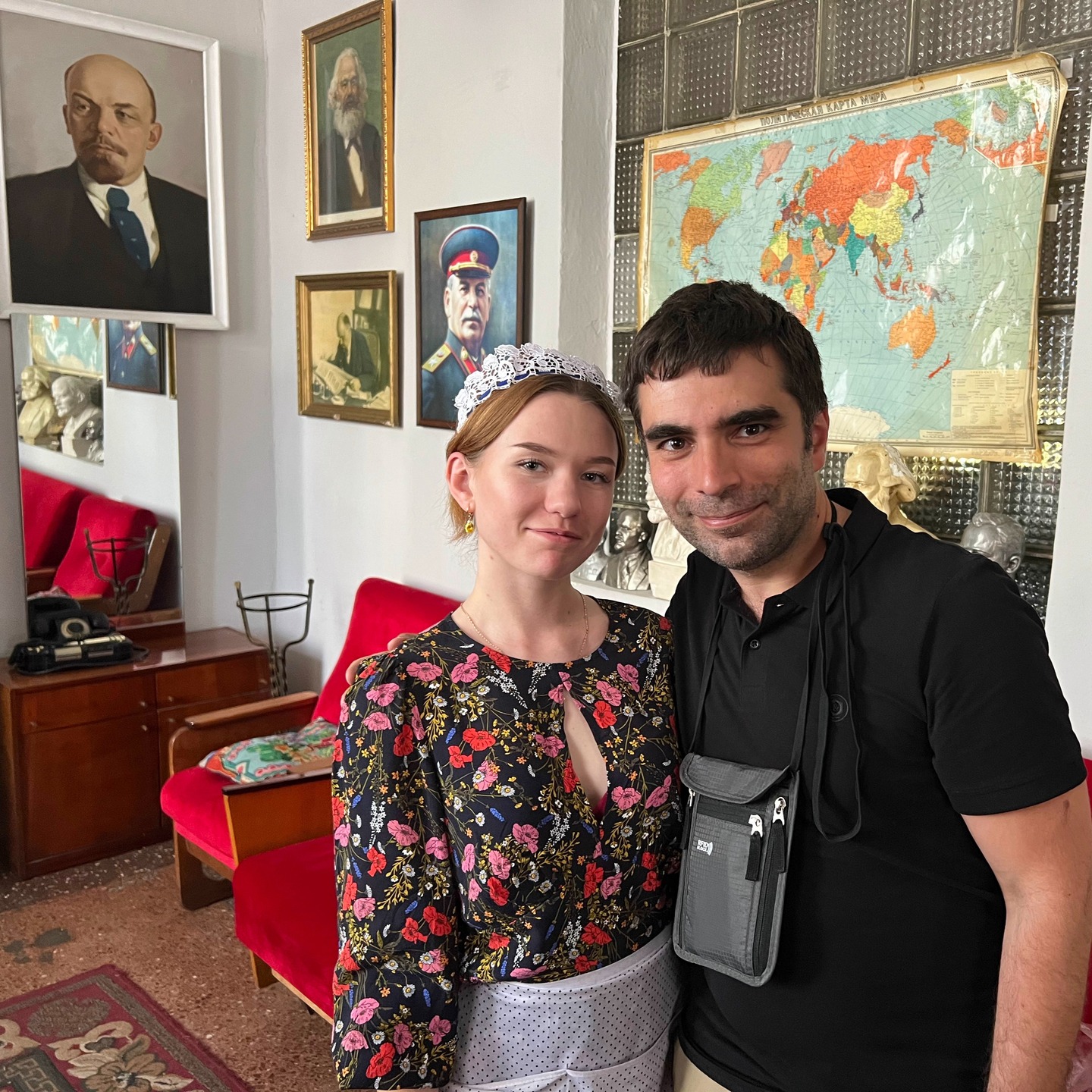
I ate them on 23 April 2025 in Tiraspol, at the “Snova v SSSR” restaurant (Back in the USSR), during a small group visit. I found the welcome and the staff super friendly and the meal excellent: for me it was pelmeni and a Ukrainian borscht.
This is not the restaurant’s recipe, but the classic Siberian pelmeni recipe. It is not difficult, but shaping them takes time: with a few people around the table it goes much faster. A rolling pin and a 5 to 6 cm cutter or glass are all you need.


The recipe
Classic recipeThe traditional recipe for the dish, not the one from the restaurant where I tasted it.
Ingredients
Dough
- 500 g plain flour
- 1 egg
- 200 ml cold water
- 1 teaspoon salt
Filling
- 250 g minced beef
- 250 g minced pork (shoulder)
- 1 large onion (150 g)
- 3 tablespoons iced water
- 1 teaspoon salt
- 1/2 teaspoon ground black pepper
Cooking and serving
- 2 bay leaves
- 5 black peppercorns
- 50 g butter
- 200 g smetana or sour cream
- 1/2 bunch dill
Method
- Make the dough: mix the flour and salt in a bowl, make a well, add the beaten egg and the water, then knead for 10 minutes until smooth and fairly firm. Wrap in cling film and leave to rest for 30 minutes at room temperature.
- Make the filling: finely grate the onion, mix it with the beef, pork, salt, pepper and iced water, then work the mixture with your hand for 2 minutes until sticky and even. Keep it in the fridge.
- Divide the dough into four. Roll out one piece on a floured surface to 1 to 1.5 mm thick, keeping the rest under a tea towel, then cut out 5 to 6 cm discs.
- Place a small teaspoon of filling in the centre of each disc, fold into a half-moon and pinch the edges firmly. Then bring the two tips together and press to seal, forming a little ear. Place the pelmeni on a floured tray, not touching.
- Bring a large pan of salted water to the boil with the bay leaves and peppercorns. Drop in the pelmeni in batches and stir gently so they do not stick to the bottom.
- As soon as they float to the surface, cook for another 4 to 5 minutes at a gentle boil. Cut one open to check that the filling is cooked through.
- Lift them out with a slotted spoon, toss them with the butter in pieces and serve piping hot with a generous spoonful of smetana and chopped dill.
Tips and variations
- Freeze uncooked pelmeni flat on the tray for 2 hours, then bag them: they keep for 2 months and can be cooked from frozen, 7 to 8 minutes after they float.
- For a broth version, serve them in their cooking water enriched with beef stock, with dill.
- Many Russians also eat them with a splash of vinegar or hot mustard instead of smetana.
Recipe shared for guidance only, adapt it to your equipment: times and temperatures may vary. Check for allergens (gluten, milk, eggs, fish, shellfish, nuts, sesame…) and make sure ingredients are fresh. Raw or undercooked fish, meat and eggs are not recommended for pregnant women, young children, elderly or vulnerable people. Take care with hot oil, flambéing and alcohol. I am not a health or nutrition professional.