
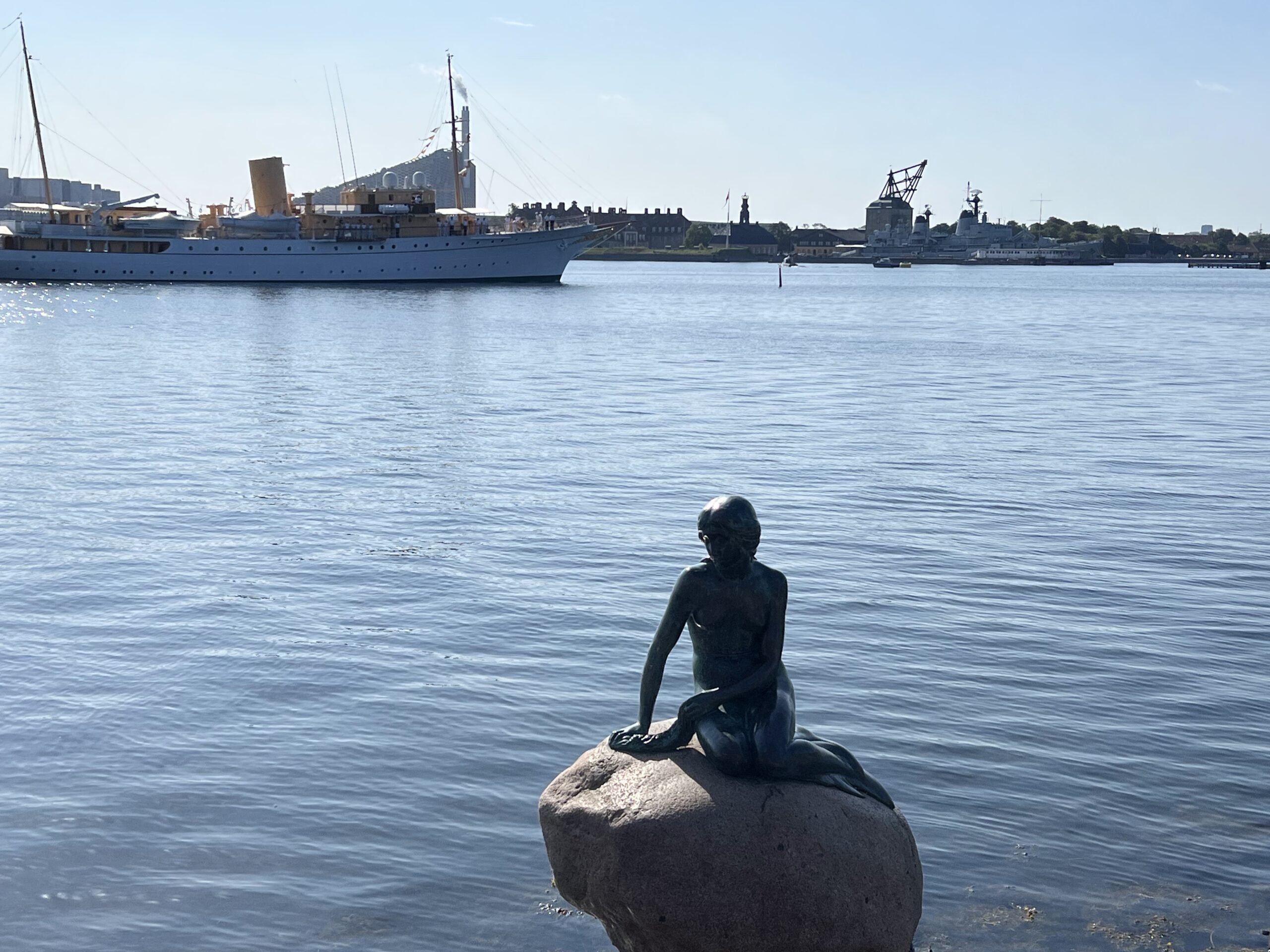
Friday 8 August 2025. A full day seeing Copenhagen on foot, from the canals of Christianshavn to the Little Mermaid, with two museums and a floating terrace to finish.
Copenhagen on foot: the waterfront and Knippelsbro bridge
It is very pleasant to walk along the waterfront, on the quays and footbridges of the Danish capital. We pass boats turned into floating homes, the Knippelsbro bascule bridge, copper towers gone green with verdigris and Blox, the contemporary architecture centre.


Christianshavn: the ramparts, the old sugar works and the canals
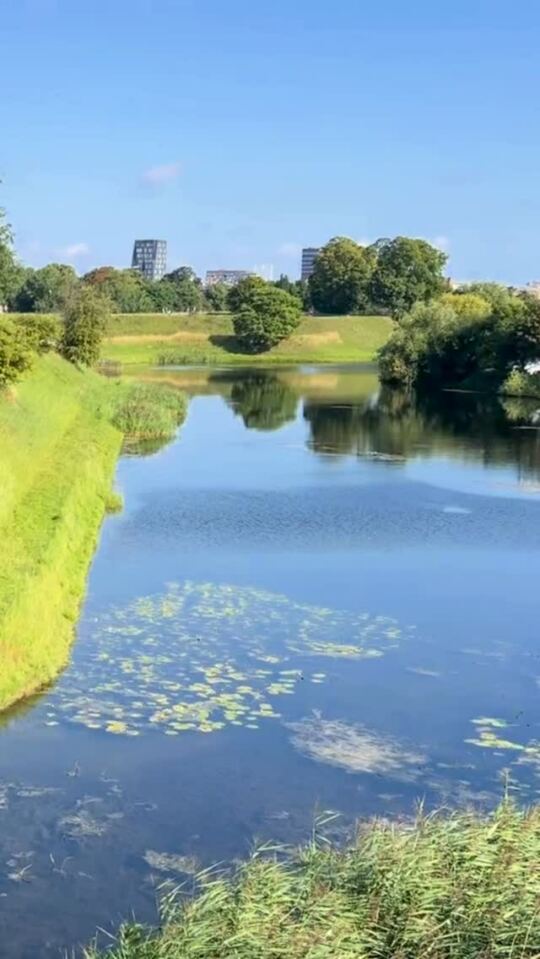
The Christianshavns Vold ramparts are part of the great fortifications built around Copenhagen in the 17th century to protect the city. Today it is a very popular, very green place, perfect for long walks and running by the water. We pass the former sugar factory De Danske Sukkerfabrikker. Christianshavn is really charming, one of the most picturesque districts in Copenhagen, between modern buildings, old red-brick houses and boats.


The Church of Our Saviour and its spiral spire
We go and visit the Church of Our Saviour, still in Christianshavn. It is a baroque church, famous for its spiral spire and its external winding staircase.

Christiania, the free town
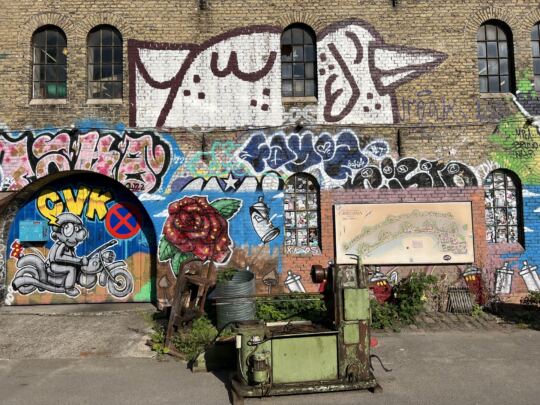
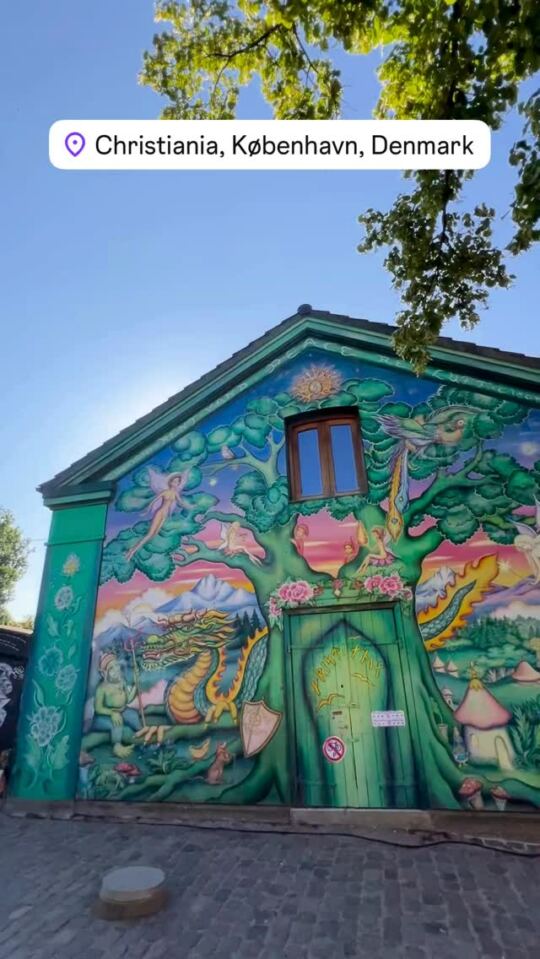
We enter the most striking district in Copenhagen, the « free town of Christiania ». A hippie, alternative, alter-globalist district, an unusual one, with a mood that is impossible to describe and completely different from the rest of the country. It was even self-governed for several years. Industrial style, street art, graffiti everywhere and psychedelic murals. I also show you around the famous skate park.


The Little Mermaid
And now, the statue of the Little Mermaid (Den Lille Havfrue), on her rock at the water’s edge. She is the symbol of Denmark, inspired by Andersen’s famous tale. Be warned, there are people. A lot of people!

Churchillparken, the Gefion Fountain and Kastellet
Not far from the Little Mermaid there is a magnificent, leafy spot: the Churchillparken gardens, with the bust of Winston Churchill, the Gefion Fountain where the Norse goddess drives her team of oxen, St Alban’s Anglican Church and the ramparts of Kastellet, Copenhagen’s citadel.

The Museum of Copenhagen and the Spirrevippen café
We have a drink at the Spirrevippen café, a really nice one, inside the Museum of Copenhagen. Then we visit the museum (Københavns Museum), which tells the history of the Danish capital since the Middle Ages: longships, the history of the fishermen… I strongly recommend the visit.


Dantes Plads and lunch at restaurant Karla
Right in the city centre, on Dantes Plads, we come across a contemporary artwork that is, how shall I put it… provocative. It is by the Danish artist Jens Galschiøt and protests against the building of a three-storey car park under the square. Lunch afterwards at restaurant Karla (Indre By), which I strongly recommend. There are very good Danish dishes. I ate local: herring marinated in cream with dill and capers, then a flæskesteg, the Danish roast pork.


The National Museum of Denmark
Next we visit the National Museum of Denmark. Founded in 1807, it is the largest history museum in the country, ideal for discovering Danish history from prehistory onwards: the Vikings, the Inuit, Greenland, and even foreign cultures. One room is devoted to the Vikings, with boats, jewellery and above all real runes. We also see old Inuit fur clothing and part of the Asian exhibition. A very interesting museum.


Rådhuspladsen, the Dragon Fountain and City Hall
After the museums we go to see the Palace Hotel on Rådhuspladsen, the Dragon Fountain in front of the Politiken building and the dragon statues in front of City Hall, as far as the entrance to the Tivoli amusement park. In the late afternoon we carry on our walk through the streets of the capital.


Green Island CPH, the floating terrace
We head back to the hotel, but we have barely arrived when we spot Green Island CPH. A compulsory stop! On the quay there is a huge floating terrace with bars and restaurants, a magnificent view of the canal, and even a floating sauna. From there we watch people dive in and swim in the canal after their sauna, and quite a few Danes quietly out on boats or rowing. A trendy, very relaxed mood, rare for a capital!


Exploring Copenhagen on foot: my tips
The centre of the Danish capital is fairly compact and almost flat, which makes it ideal for walking. Strøget, one of the longest pedestrian streets in Europe, runs through the old town from City Hall Square to Kongens Nytorv. And to get from one side of the harbour to the other, there are plenty of bridges reserved for pedestrians and bikes.
Do watch out for bikes, though: this is one of the most bike-friendly cities in the world, and the cycle lanes are very busy. Look carefully before crossing, and don’t walk in the cycle lanes.
My tip for exploring Copenhagen on foot: wear good shoes, because the kilometres add up quickly, and start early to see the Little Mermaid before the groups arrive. To find out more about the free town, here is the Christiania Wikipedia page, and my whole stay is gathered on my Copenhagen page.