

I went to visit Rouen twice in 2026, in August and again in late October, and the city has become my base in Normandy. The centre is easy to cover on foot, between the cathedral, the Gros-Horloge and Place du Vieux-Marché. Here is what I would see and eat, based on what I actually did there.
Visit Rouen: start with the view from the Côte Sainte-Catherine
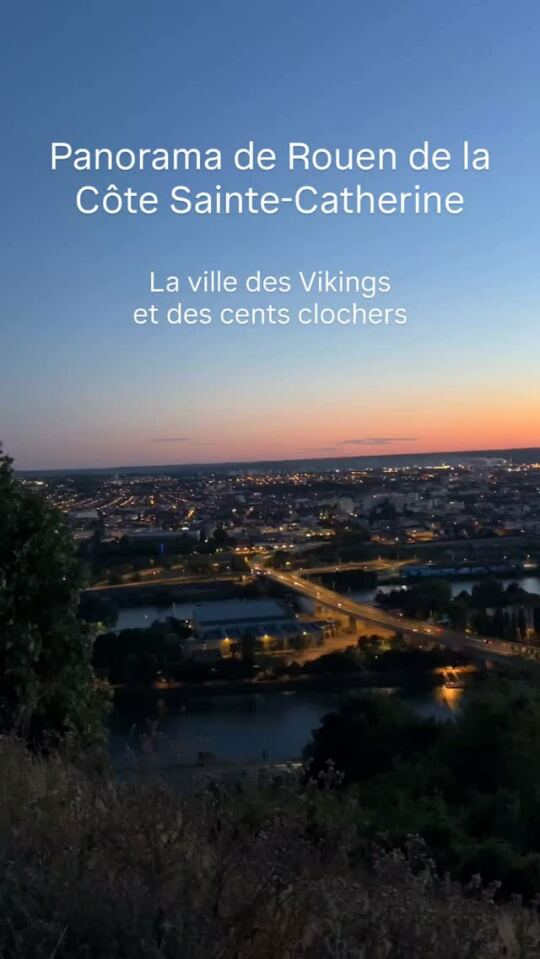
I would start from above. From the Côte Sainte-Catherine you have the whole city in front of you, with the Seine and all the bell towers. This is the river the Vikings sailed up, and Rollo became the first Duke of Normandy. The viewpoint is free, you can drive or walk up, and it is worth it by day and by night. Just above, the basilica of Notre-Dame de Bonsecours, neo-Gothic and richly decorated, looks down over the valley.

The cathedral, the Gros-Horloge and the Vieux-Marché
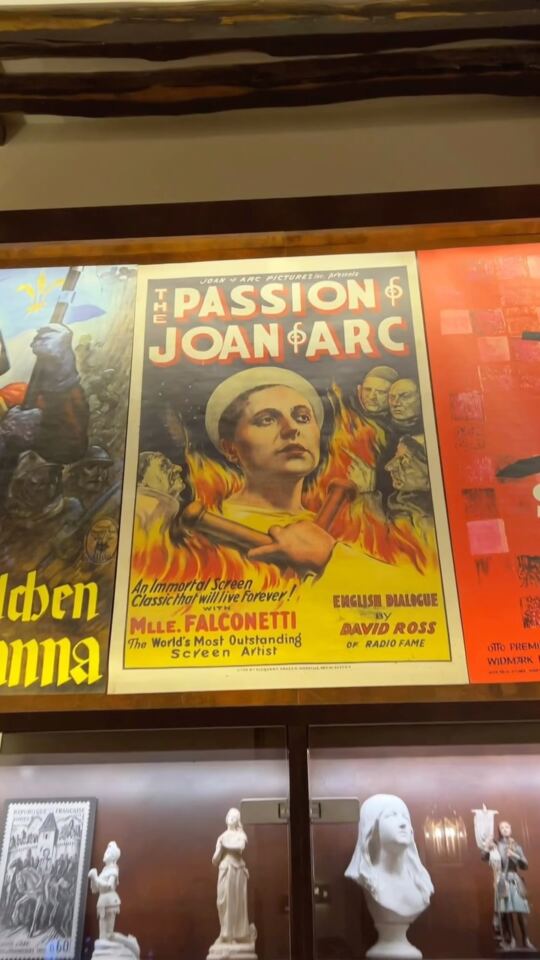
Notre-Dame Cathedral is huge. It is the one Monet painted so many times, entry is free, and inside Joan of Arc is everywhere. A short walk away, the Gros-Horloge, an astronomical clock, spans the pedestrian street named after it. At the end of that street you reach Place du Vieux-Marché, where Joan of Arc was burned in 1431. Today you find half-timbered houses, café terraces and the modern church of Sainte-Jeanne-d’Arc.
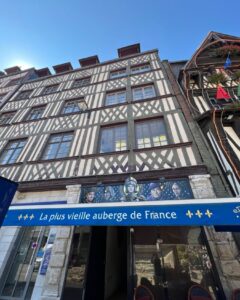
On the square, La Couronne presents itself as the oldest inn in France, dating from 1345. And one August evening, between two showers, I got a rainbow right above the cathedral spire. Norman weather has its good sides.

Street art, Napoleon’s statue and the Saint-Romain Fair
Rouen is more than half-timbered houses. On Rue des Charrettes, near Rue Jeanne-d’Arc, the walls are covered in street art. In front of the town hall, on Place du Général-de-Gaulle, you come across the equestrian statue of Napoleon, quiet in the morning. And in autumn, from the Gustave-Flaubert bridge, you see the whole Saint-Romain Fair, the city’s big funfair.
Where to eat in Rouen
Sunday is market day on Place Saint-Marc. You buy your platter of Saint-Vaast oysters there, 13 euros a dozen, and eat it at the brasserie Le Clos Saint Marc. On Place du Vieux-Marché, the fishmonger also serves seafood to eat on the spot, with scallops in season and oysters all year round.

For something sweet there is Maison Vatelier, with its all-butter pastries and cakes that taste as good as they look. On Rue du Gros-Horloge, Amorino serves Italian ice cream shaped like a rose. For a simple dish in a 1900s setting, La Belle Époque. And for a smash burger with harissa-sauce fries, Blast, in Le Petit-Quevilly, right next to Rouen.
If you have time left
Rouen can easily fill a few more days. There is the Historial Jeanne d’Arc, the church of Saint-Maclou, the abbey church of Saint-Ouen, the Fine Arts Museum, Rue Eau-de-Robec, the Jardin des Plantes, or a cruise on the Seine. Rouen is also a good starting point for Honfleur over the Pont de Normandie, La Bouille in a loop of the Seine and Dieppe, an hour’s drive away. It is all in my Normandy guide.
My travel diaries in Rouen
 November 7, 2026🇫🇷 Rouen - Salon Gourmand: nettle teas, nougat, kouign-amann and organic jams
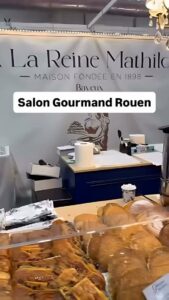 November 6, 2026🇫🇷 Rouen - Salon Gourmand at the Parc Expo, À la Reine Mathilde and a giant cake
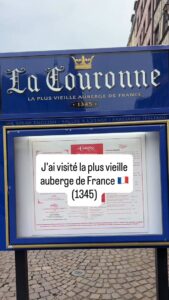 October 26, 2026🇫🇷 Rouen and La Bouille - Seine quays and La Couronne, France’s oldest inn
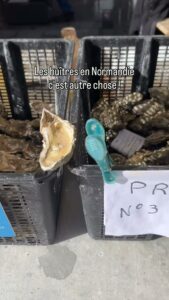 October 25, 2026🇫🇷 Rouen - Saint-Vaast oysters at the Saint-Marc market and the Saint-Romain Fair
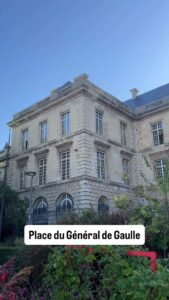 August 7, 2026🇫🇷 Rouen and Épernay - Street art, Napoleon’s statue and champagne
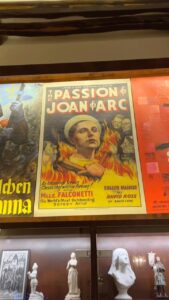 August 6, 2026🇫🇷 Rouen - Cathedral, Gros Horloge and the Côte Sainte-Catherine view
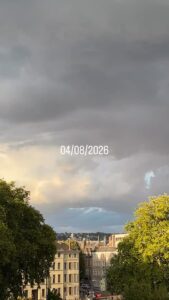 August 4, 2026🇫🇷 Rouen - A rainbow over the cathedral and a smash burger
 August 2, 2026🇫🇷 Amiens, Rouen and Dieppe - Welcome to Normandy
Visit Rouen: my last tips
To visit Rouen, bring good shoes: the historic centre is best explored on foot, and many streets are cobbled. The cast-iron spire of the cathedral, the tallest in France, works as a landmark from almost everywhere, so it is hard to stay lost for long.
Rouen is also the birthplace of Gustave Flaubert, and it is often nicknamed “the city of a hundred bell towers”. If you come at the weekend or during a big festival, book your accommodation early. And always keep an umbrella in your bag, the Normandy weather changes fast.