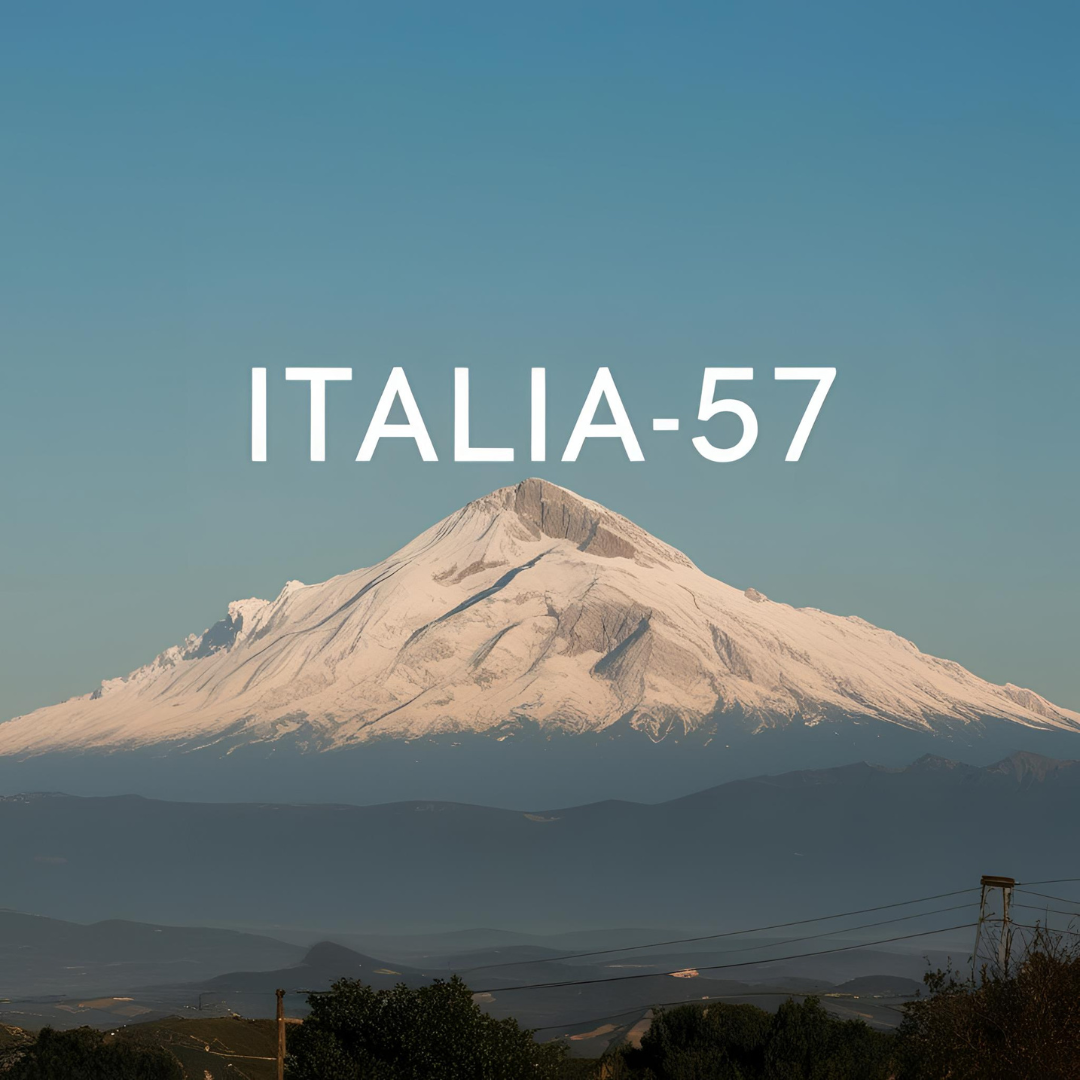

Wednesday 23 April 2025. An organised day trip from Chișinău to Bender and Tiraspol, in Transnistria, the breakaway region in the east of Moldova.
Before Bender, the morning at Chișinău’s central market
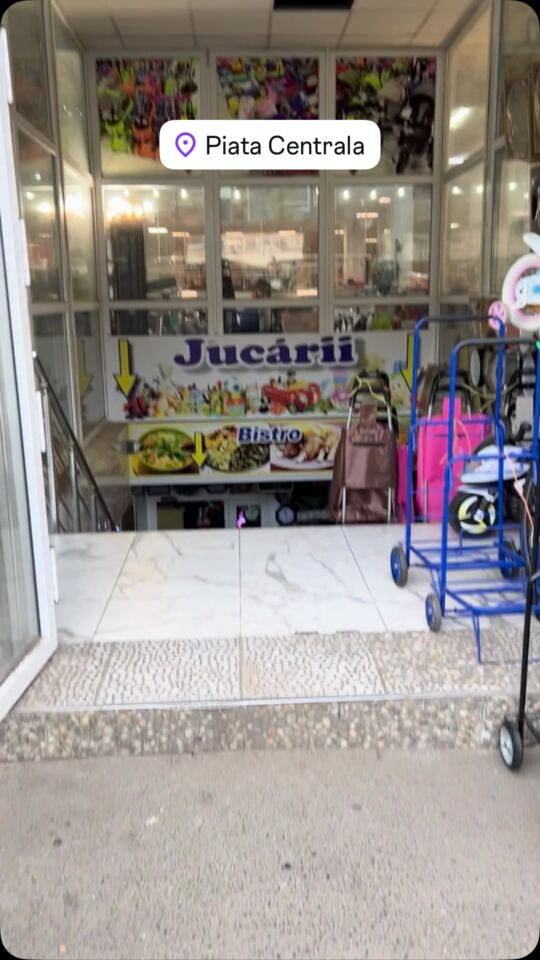
This morning, a stop at Piața Centrală, Chișinău’s big open market: huge, 100% local, with pomegranate juice pressed on the spot.

From Chișinău to Transnistria
From the motorway, a view of the forest of modern residential towers in the Botanica district of Chișinău, with the Dansicons and Gudrinal signs. We are off to visit Bender and Tiraspol, in Transnistria. Its authorities call it Pridnestrovie, or the Pridnestrovian Moldavian Republic. It is a state self-proclaimed in 1990 and separated de facto from Moldova since the war of 1992, which no UN member state recognises. Only Abkhazia and South Ossetia do. It is often called the last bastion of the USSR: there are a great many statues and monuments from the Soviet era, and the mood really is unique. Coming from Moldova, you go through a real checkpoint, with passport control. I also show you the local currency, the Transnistrian rouble. For information, France advises against travel to the region. We went with an organised excursion.


The Church of Saints Joachim and Anne
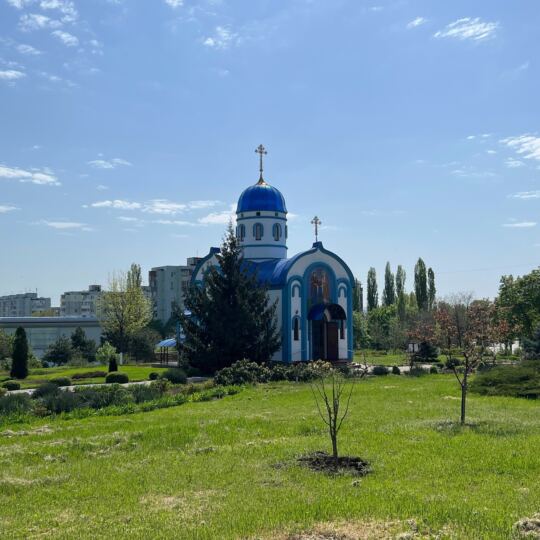
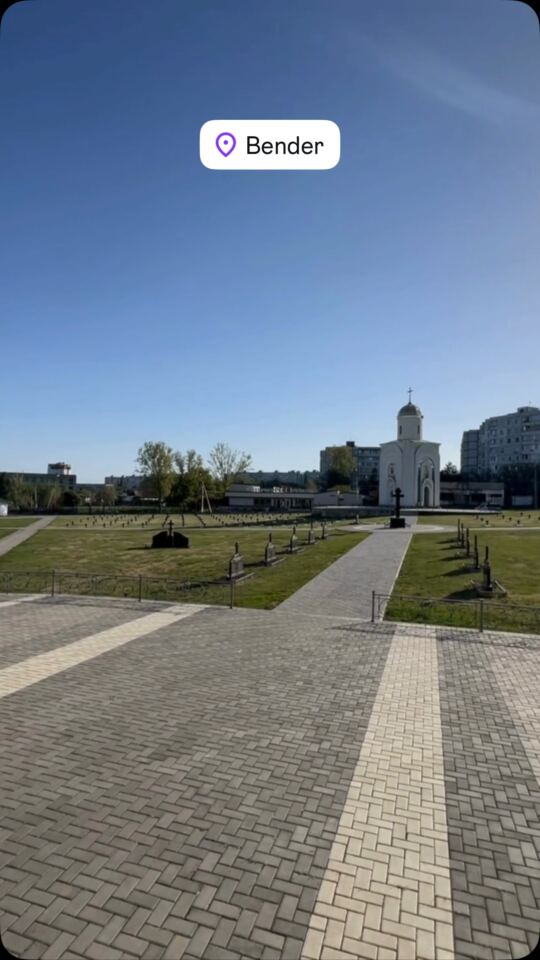
Safely arrived in Bender. First stop: the small and magnificent Russian Orthodox Church of Saints Joachim and Anne.
Bender Fortress, on the Dniester
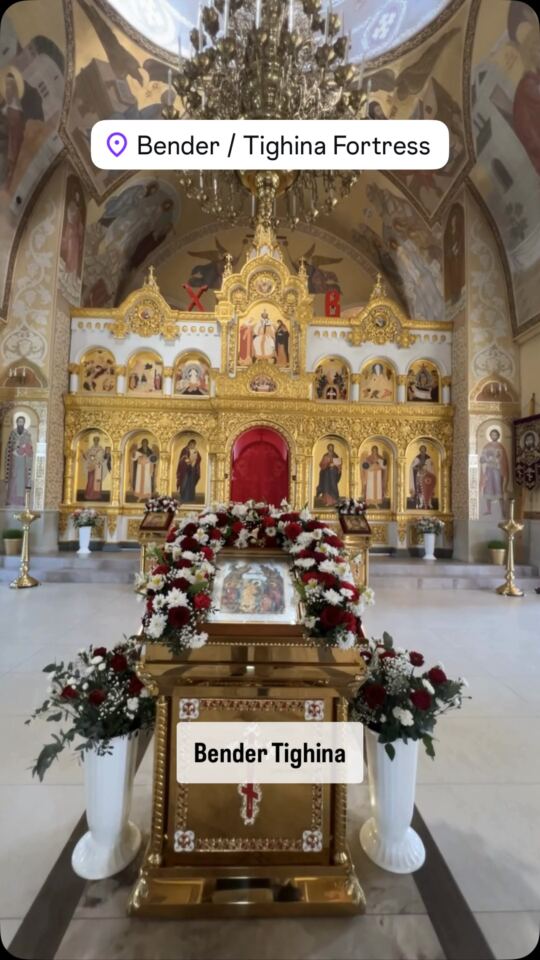
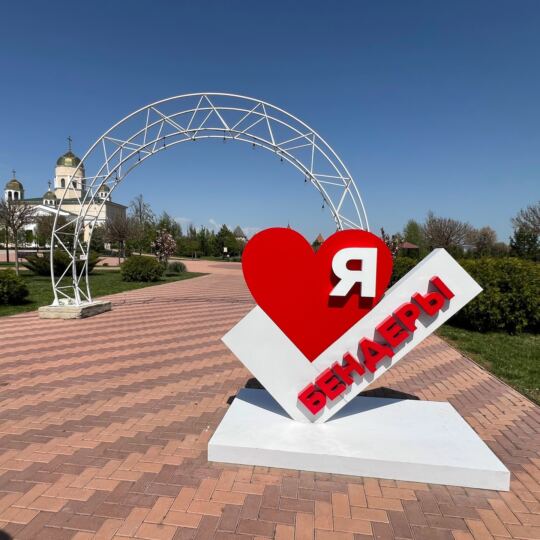
On to Bender Fortress (Tighina in Romanian), on the Dniester. We first visit the Alexander Nevsky Orthodox church, built in the 19th century. Then the outside of the fortress: the town was conquered by the Ottoman sultan Suleiman the Magnificent in 1538, and the fortress built from then on by the Ottoman Empire. It became Russian after the Russo-Turkish War of 1806-1812. Inside there is a museum, and from the top of the fort the view is magnificent. In Alexander Nevsky Park there is also the « I Love Bender » sculpture.


The Park of Military Glory
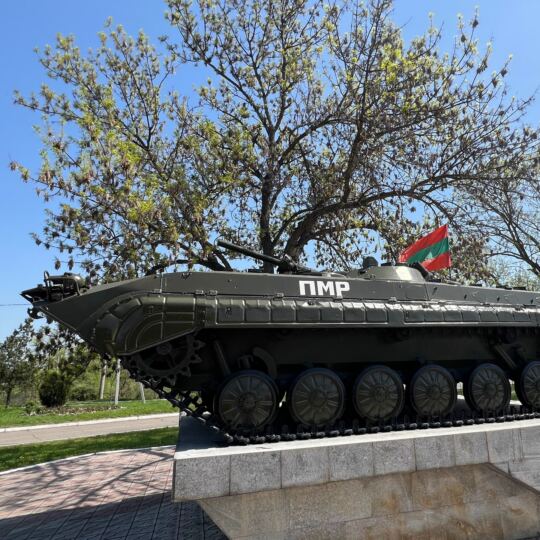
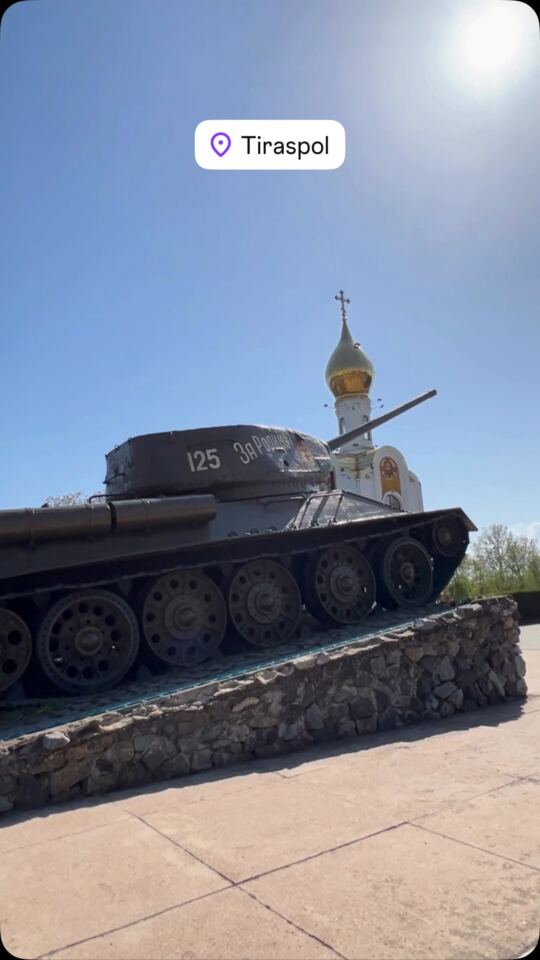
Next visit, the memorial Park of Military Glory (Парк Славы). It honours the soldiers who fell in several conflicts, above all the Transnistria war of 1992. There is an eternal flame, the white Bell of Memory monument (Колокол Памяти), and a tank bearing the inscription ПМР, the Russian initials of the Pridnestrovian Moldavian Republic, with the region’s flag.
The afternoon in Tiraspol, on video
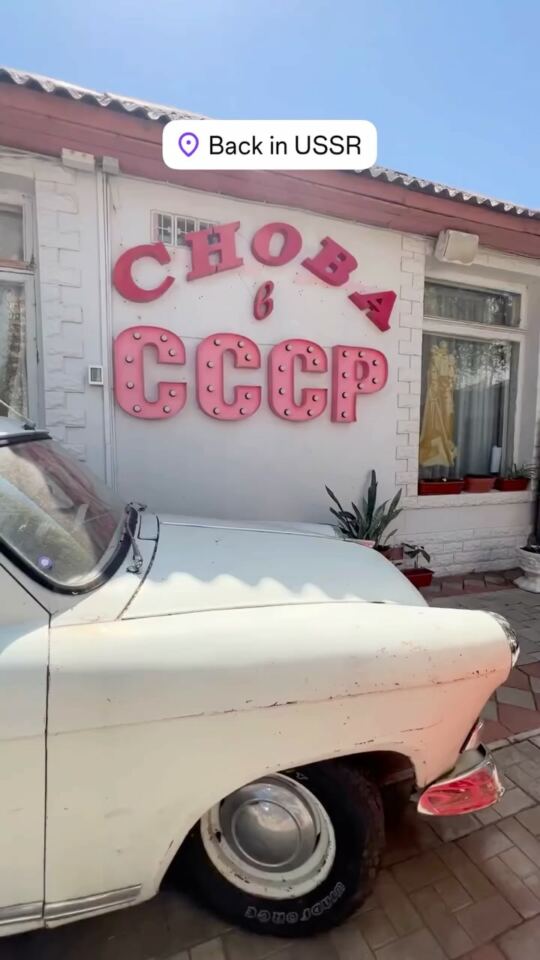
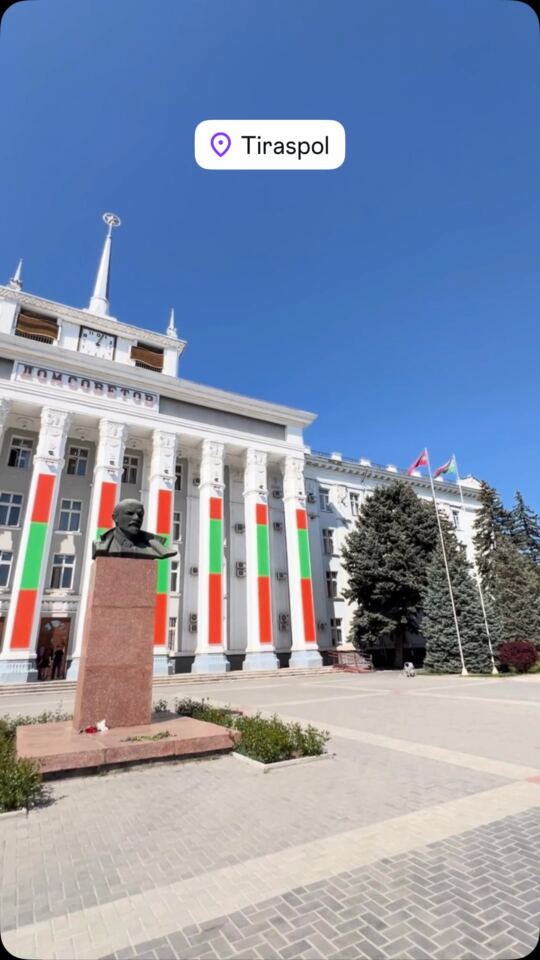
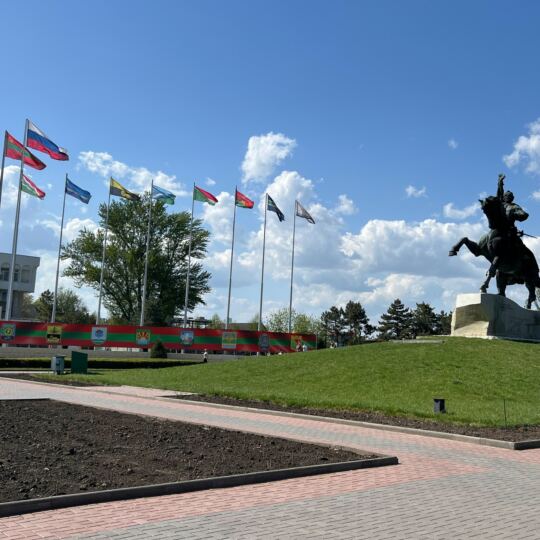
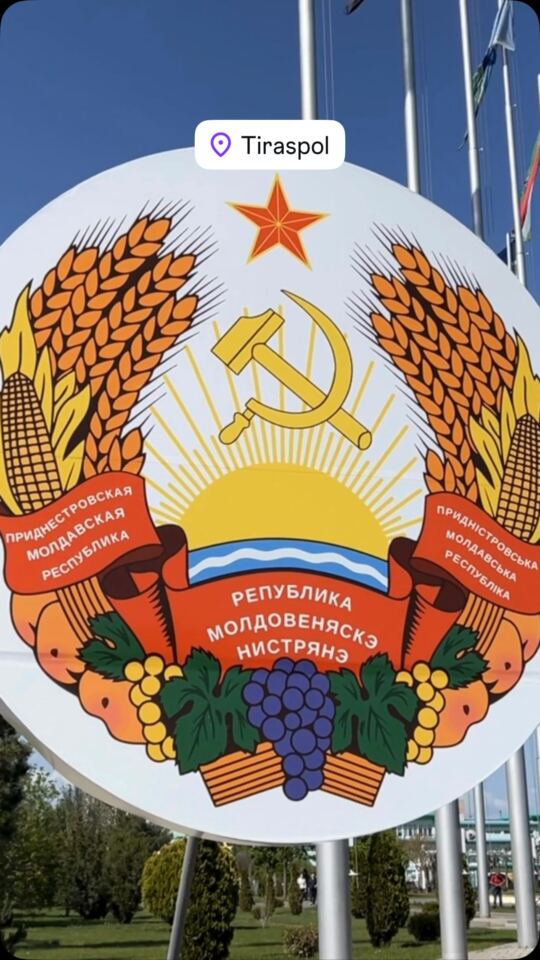
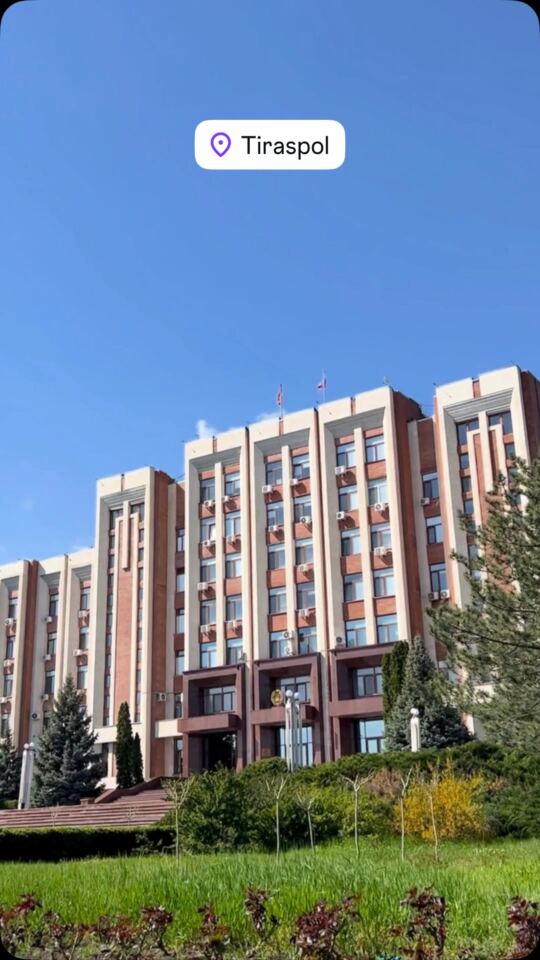
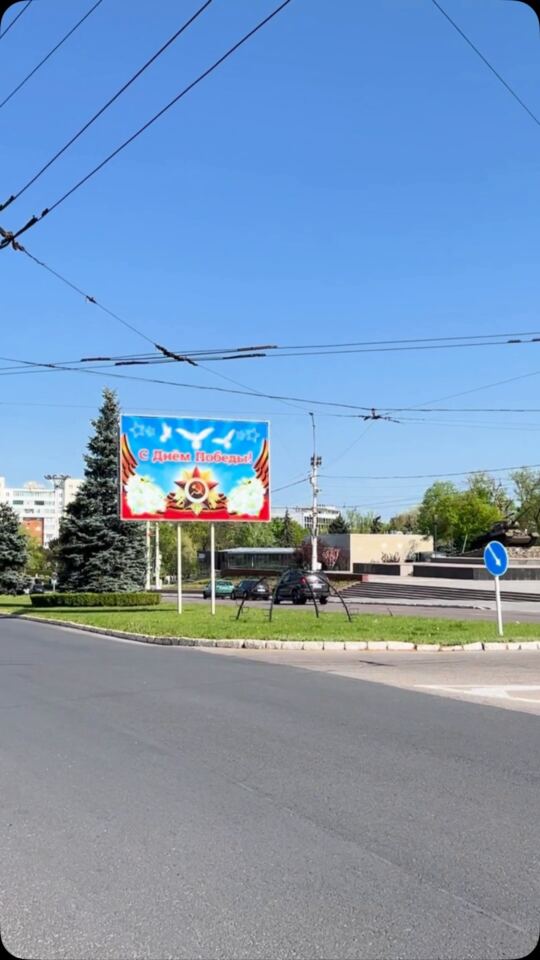
The afternoon is spent in Tiraspol, the region’s main city. Lunch at the Back in the USSR restaurant (Снова в СССР), very Soviet decor, Ukrainian borscht and pelmeni. Then the Lenin statue in front of the Supreme Council, Suvorov Square and its equestrian statue of the city’s founder, the coat of arms with hammer and sickle, the Memorial of Glory and the T-34 tank. Tiraspol has its own article, with all the details.
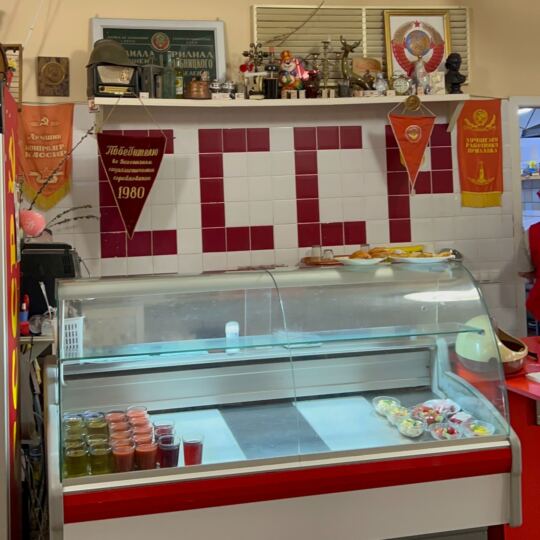
The Soviet canteen in Bender
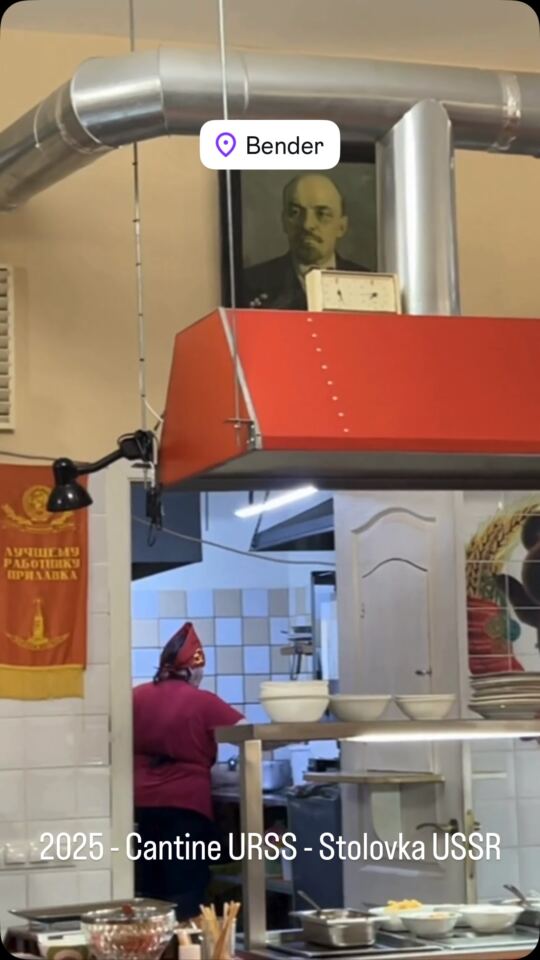
On the way from Tiraspol back to Chișinău we stop at a real Soviet canteen in Bender, the Столовая СССР. Not to be missed on any account: the moment you walk in you are right back in the USSR. There really are a lot of flags, plaques and objects typical of the Soviet era. We take the chance to have a drink.
Back to Chișinău and an evening at Taifas
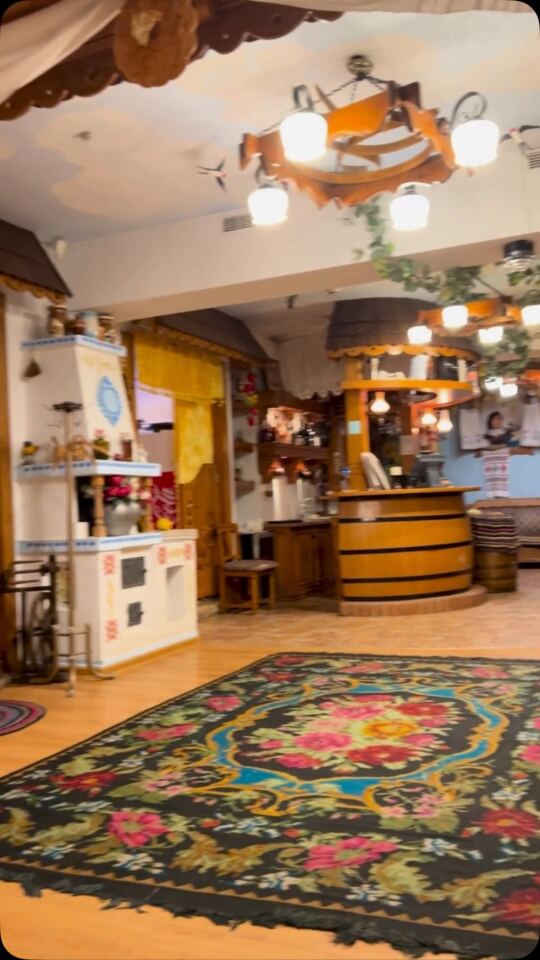
Back to Chișinău. And tonight we return to the Taifas restaurant! Nothing to fault, it is perfect, for the food, the drinks and the typically Moldovan decor.
Bender, a town on the Dniester
One thing that makes the town special: it stands on the right bank of the Dniester, while almost all of Transnistria is on the left bank. Its Romanian name is Tighina. Some of the hardest fighting of the 1992 war took place here, which explains why memorials are so present in the town.
The fortress also has a surprising European history: after his defeat at Poltava in 1709, King Charles XII of Sweden took refuge near here, under Ottoman protection, and stayed for several years.
My tips: keep your passport on you all day, and avoid taking photos of soldiers and checkpoints. To find out more, here is the town’s Wikipedia page, and all my posts about the region are on my Transnistria page.