
Wednesday 23 April 2025. The morning at Chișinău central market, the evening a tasting at Castel Mimi and dinner at Taifas.
Chișinău central market, a souk the Slavic way
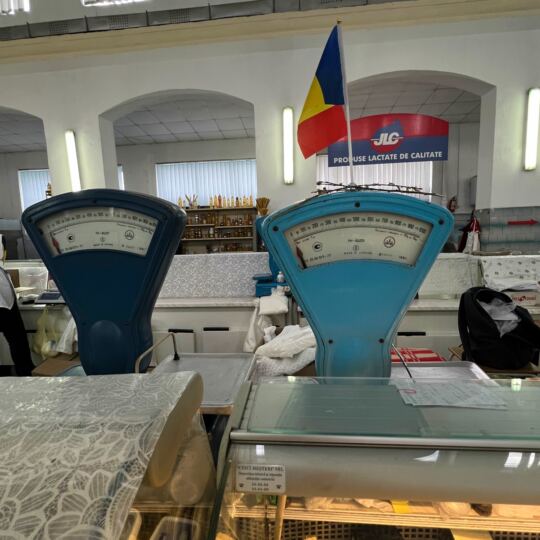
This morning we visit Chișinău’s big open market, Piața Centrală. It is huge, 100% local, authentic. You find everything there, and no tourist traps here! Everything you need for everyday life, like getting keys cut or even buying a TV remote control. A mix of smells and colours. To be honest, the mood is more souk or bazaar, but in a Slavic and Soviet version. It is quite a contrast with other European capitals. A few photos: the very retro weighing scale, the delicious juice from (enormous) pomegranates pressed on the spot, the butchers where the meat and carcasses are cut up in front of you, the entrance to the live fish hall, and typical local products, lavash and home-made jams.

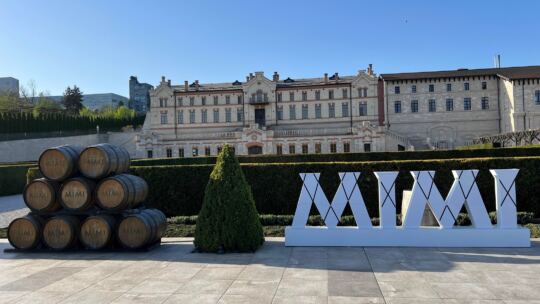
A tasting at Castel Mimi
Last visit of the evening: a wine tasting at Castel Mimi. It is one of the finest wine estates in Eastern Europe, French-inspired, and a lovely place to get to know Moldovan wine. Careful, alcohol abuse is dangerous for your health, drink in moderation.
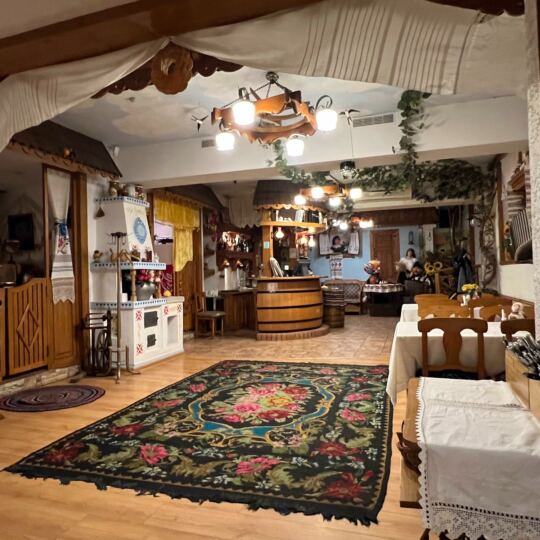
Back at Taifas
Tonight we return to the Taifas restaurant, in Chișinău! Nothing to fault, it is perfect, for the food, the drinks and the typically Moldovan decor.
Making the most of Chișinău central market
In Romanian, “piață” means both square and market: Piața Centrală simply means the central market. It is where locals do their everyday shopping, and that is what makes it so lively. Chișinău central market is at its best in the morning, when the stalls are full and the produce is at its freshest.
My tips: come early, bring some lei in cash for the small stalls and keep an eye on your belongings in the crowded aisles. Try the pomegranate juice pressed in front of you, and leave with a jar of home-made jam.
As for the tasting, Moldova is a real wine country, with its own grape varieties such as fetească neagră, fetească albă and rară neagră. Castel Mimi is a wine château built at the end of the 19th century by Constantin Mimi, in the village of Bulboaca. To find out more about the city, here is the Chișinău page on Wikipedia, and all my posts about the Moldovan capital are on my Chișinău page.