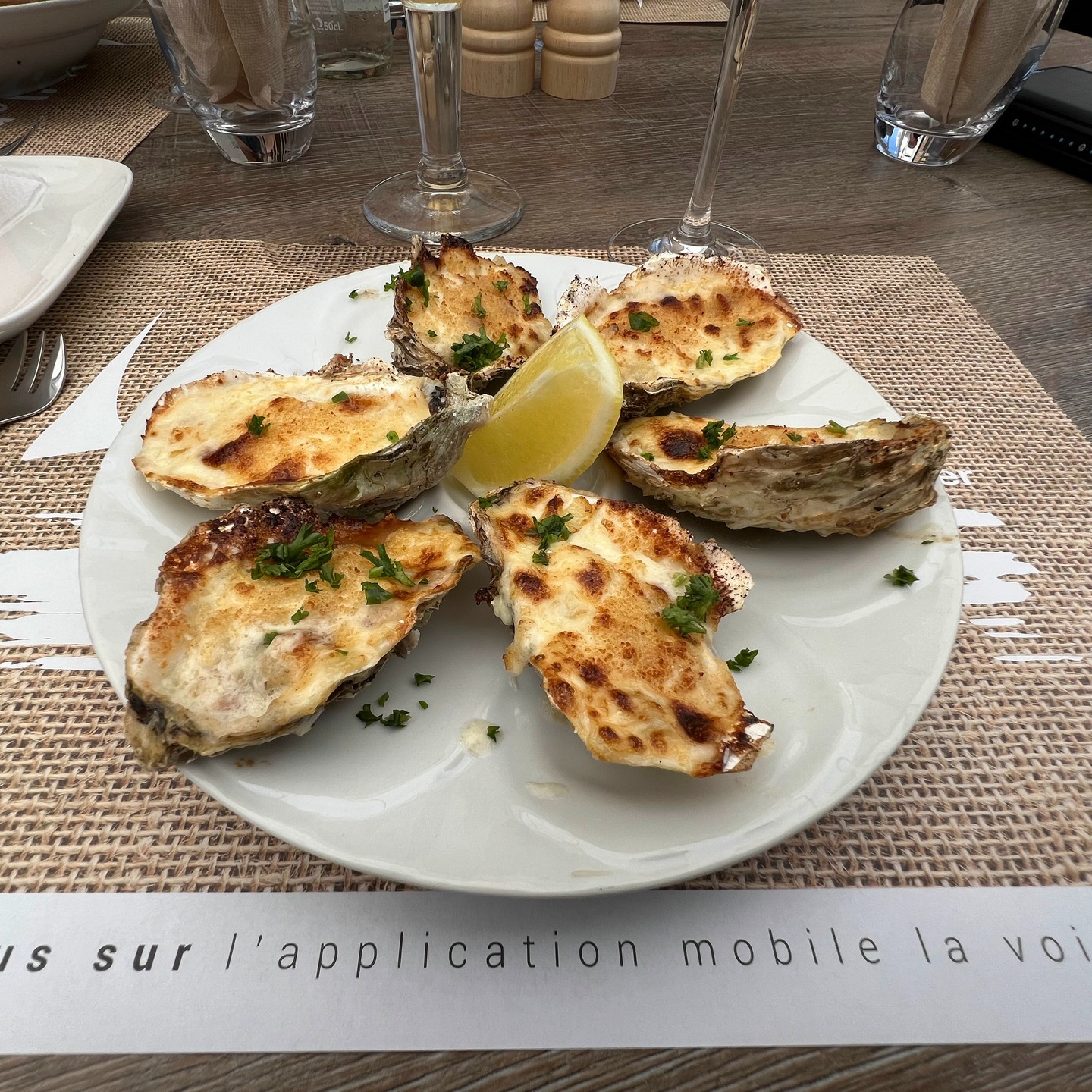
Baked oysters, huîtres gratinées in French, are a classic way of enjoying oysters warm, very popular along the French coast and at festive meals. Rock oysters are opened, barely firmed in their own juices, then returned to their shells and topped with a sabayon, an emulsion of egg yolks whisked over a bain-marie with champagne or white wine and shallots. A quick blast under the grill browns the top, while the oyster underneath stays tender and briny.
I had them on 16 June 2023 in Bray-Dunes, for lunch, at La Voile Bleue restaurant. The baked oysters opened the meal, followed by a seafood plate with grilled fish, mussels, baby vegetables and creamy risotto.
This is not the restaurant’s recipe, but the classic version of the dish, as made in many French homes and seaside brasseries. It is of medium difficulty: you need to know how to open oysters with a proper knife and whisk the sabayon without overheating it.


The recipe
Classic recipeThe traditional recipe for the dish, not the one from the restaurant where I tasted it.
Ingredients
Oysters
- 24 rock oysters, size 2 or 3
- Coarse salt to hold the shells steady
Champagne sabayon
- 2 shallots, finely chopped
- 20 g butter
- 150 ml brut champagne or dry white wine
- 3 egg yolks
- 50 ml well-chilled whipping cream
- White pepper
Method
- Open the oysters with an oyster knife, protecting your hand with a cloth. Strain their juices into a bowl through a fine sieve lined with kitchen paper. Detach the flesh, set it aside, and keep the deep shells, rinsed and dried.
- In a small saucepan, soften the shallots in the butter for 2 minutes without colouring. Add 100 ml champagne and the strained oyster juices and bring to a simmer.
- Drop the oysters into the simmering liquid for 20 to 30 seconds, just until they firm up, then lift them out with a slotted spoon. Boil the liquid until only about 3 tablespoons remain, then leave to cool slightly.
- Preheat the oven grill to 250 °C. Arrange the shells on a tray covered with coarse salt so they sit level, and put an oyster back in each with a little shallot.
- Make the sabayon: in a heatproof bowl set over a pan of simmering water (the bottom must not touch the water), whisk the yolks with the reduction and the remaining 50 ml champagne for 5 to 6 minutes, until foamy, thick and leaving a ribbon trail. Take off the heat. Whip the cold cream to soft peaks and gently fold it into the sabayon. Season with pepper.
- Spoon some sabayon over each oyster and slide under the grill for 2 to 3 minutes, watching closely, until golden on top. Serve immediately.
Tips and variations
- Do not salt the sabayon: the oyster juices already provide all the salt you need.
- The sabayon should not go above about 65 °C or the yolks will scramble: lift the bowl off the bain-marie for a few seconds if needed.
- Simpler variation: top the oysters with garlic and parsley butter, sprinkle with breadcrumbs and grill for 3 to 4 minutes.
- Serve with the rest of the champagne or a well-chilled Muscadet.
Recipe shared for guidance only, adapt it to your equipment: times and temperatures may vary. Check for allergens (gluten, milk, eggs, fish, shellfish, nuts, sesame…) and make sure ingredients are fresh. Raw or undercooked fish, meat and eggs are not recommended for pregnant women, young children, elderly or vulnerable people. Take care with hot oil, flambéing and alcohol. I am not a health or nutrition professional.